
Zinsco & Federal Pacific Panels: Why Insurers and Inspectors Flag Them
Zinsco and Federal Pacific (Stab-Lok) panels are mid-century breaker panels with a documented reputation for breakers that fail to trip during overloads and faults, which is the single job a breaker exists to perform. That’s why home inspectors write them up on sight and many insurers surcharge or refuse to cover homes that keep them. Here’s how to identify one, what the record actually shows, and what replacement looks like.
In this guide
What are Zinsco and Federal Pacific panels?
Both were mainstream, code-accepted products in their day, which is exactly why they’re everywhere. Federal Pacific Electric sold its Stab-Lok panel line from roughly the 1950s into the 1980s, and builders loved it because it was compact and cheap. Zinsco, later sold under the GTE-Sylvania name, had its heyday from the 1950s through the 1970s, particularly out west. Millions of each went into American homes, and the post-war neighborhoods of Weber and Davis counties got their share.
Neither company’s design survives in production, but the panels themselves soldier on behind garage walls and in basements, often looking perfectly fine. That appearance is the trap: the concerns with these brands are internal and invisible, which is why the conversation centers on brand identification rather than visible condition. Around here, the highest hit rate is in homes built or expanded between the late 1950s and the late 1970s, especially where the original service equipment was never touched by a remodel.
What actually goes wrong inside them?
A breaker is a promise: when current exceeds the rating, it opens the circuit before the wiring overheats. The documented problem with these two product lines is broken promises. Independent testing of Stab-Lok breakers over decades has reported failure-to-trip rates dramatically higher than modern equipment, in some test batches affecting a substantial share of samples. The U.S. Consumer Product Safety Commission investigated FPE in the early 1980s and closed the case without a definitive ruling, citing budget constraints, which settled nothing and satisfied nobody.
Zinsco’s troubles are mechanical cousins: breaker contacts that can weld to the aluminum bus bar, and internal deterioration that lets a breaker sit in the ON position while doing nothing at all. A failed breaker of this kind doesn’t announce itself. The circuit keeps working normally right up until a fault arrives and the safety net isn’t there.
A breaker that carries power but can’t interrupt it isn’t protection; it’s a rumor of protection.
Why do insurers and inspectors flag them?
Because both professions run on documented risk, and these panels carry a paper trail. A home inspector’s standards oblige them to report known-defective equipment categories, so a Stab-Lok label goes in the report regardless of how tidy the installation looks. From there the finding flows downstream: buyers request replacement credits, agents brace for negotiation, and underwriters get involved.
On the insurance side, practices vary by carrier but the direction is consistent: some insurers decline to write new policies on homes with these panels, others require replacement within a deadline as a condition of coverage, and others apply surcharges. If you’re shopping coverage or approaching a renewal on an older home, the panel brand question tends to arrive sooner or later. Symptoms may never appear first; our guide to the signs you need a panel upgrade explains why brand-based replacement is the exception to the usual symptom-first logic.
How do you tell if you have one?
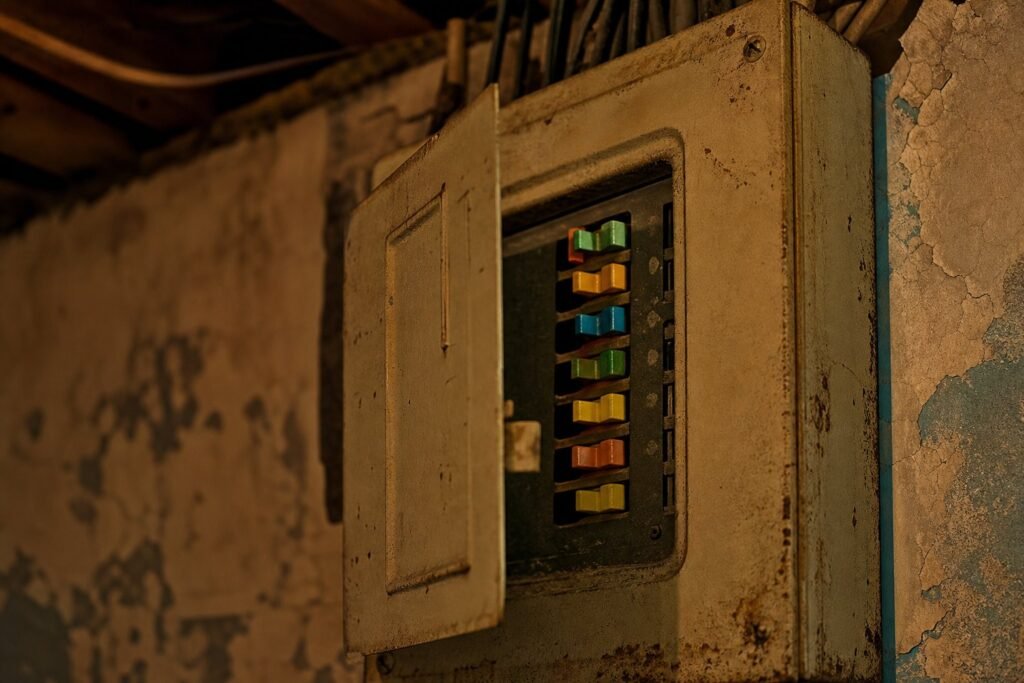
Start with the door and the label, no tools required. Manufacturer names usually appear on the panel door, the label inside it, or stamped into the breakers themselves. Then look at the breaker handles, because both brands have a distinctive look once you know it.
| Brand | Era sold | What gives it away |
|---|---|---|
| Federal Pacific (FPE) | Roughly 1950s–1980s | “Federal Pacific” or “FPE” on the door; the word “Stab-Lok” on the label or breakers; breaker handles marked with red accents are common |
| Zinsco / GTE-Sylvania | Roughly 1950s–1970s | “Zinsco” or “Sylvania” branding; slim breakers with brightly colored handles, often blue, red, or green, lined up in a narrow column |
Two cautions. First, some panels were rebranded or absorbed into successor product lines, so a Sylvania label deserves a closer look rather than automatic relief. Second, never pull the inner cover to investigate; identification is a door-and-label exercise, and anything deeper belongs to someone carrying a meter and a license. Our panel and meter upgrade service includes exactly this verification as part of any evaluation.
What does replacement involve?
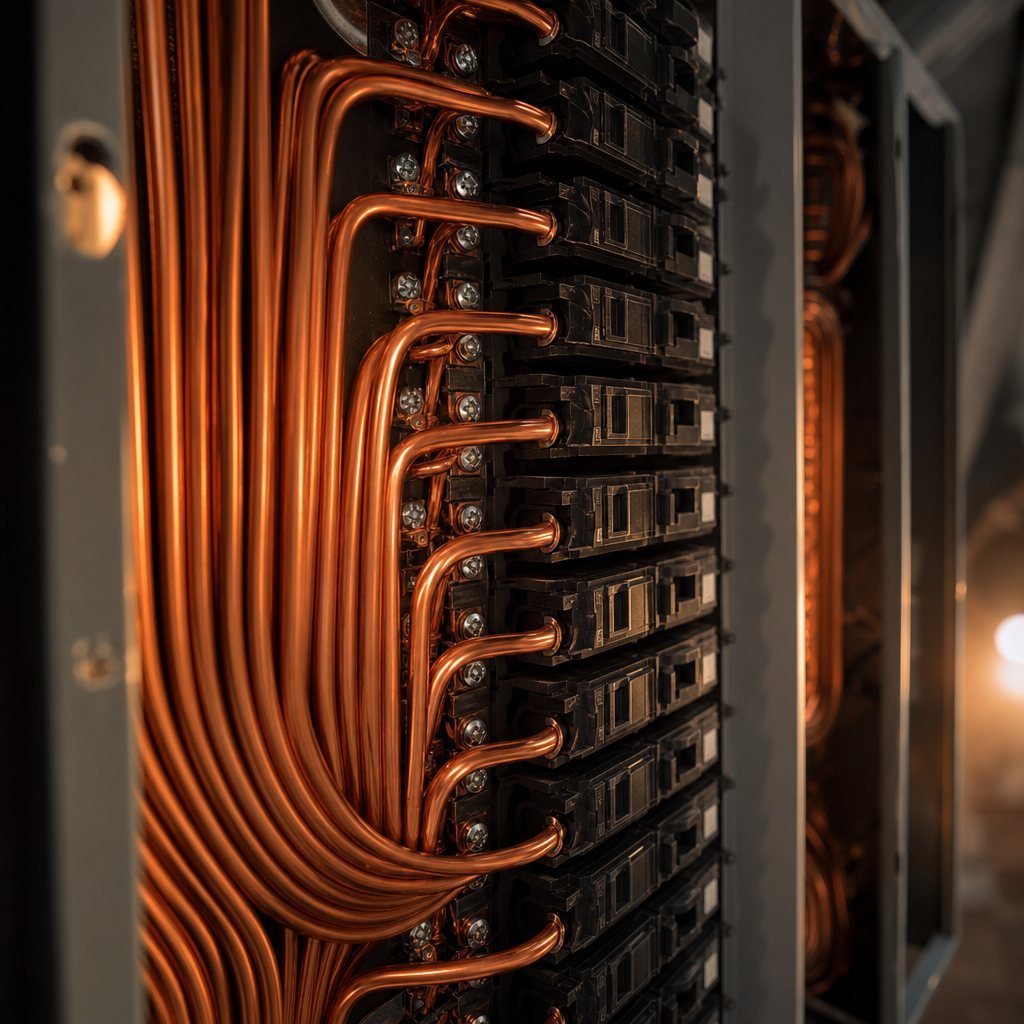
Replacing a flagged panel is a standard service-equipment job with one wrinkle: there’s no partial fix. Replacement breakers for these lines are aftermarket, expensive, and still ride on the original bus design, so the industry consensus is to replace the panel rather than re-breaker it. The project follows the usual sequence:
- An evaluation confirms the brand, checks the meter base and service size, and produces a written quote.
- Your contractor pulls the city permit, since this is inspected work everywhere in Utah.
- A utility disconnect window gets scheduled so the equipment can be swapped dead.
- On install day the old panel comes out, a modern listed panel goes in, and every circuit re-lands on current breakers with today’s required protection.
- The city inspector reviews and closes the permit, giving you the documentation insurers ask for.
Costs track a normal service change: if the service stays the same size, some jobs land below the typical upgrade band, while combining the swap with a 100-to-200-amp upgrade puts you in the standard $1,500–$3,000 Utah range detailed in our panel upgrade cost breakdown. Since the labor and permit are being spent anyway, most owners of these panels choose the capacity bump at the same time; the complete panel upgrade guide walks that whole decision tree.
Is every old panel one of these?
No, and this is where we’d rather lose a sale than stretch the truth. Age alone doesn’t condemn a panel. Plenty of vintage equipment from other manufacturers still tests fine, trips when asked, and simply lacks the capacity or slot count modern life prefers. Those panels are candidates for upgrade on the merits, not hazards demanding urgent replacement, and the difference should be reflected in how the work gets scheduled and priced.
The flagged-brand conversation is narrower than the internet makes it sound: a specific set of product lines with a specific documented failure mode. If your inspection report names one, act on it. If your panel is merely old, get it evaluated honestly and let the load calculation, not fear, set the timeline. The panel upgrade guide covers what that evaluation weighs.
If you smell burning or see scorching at any panel: that’s not a brand question anymore. Stop resetting breakers, keep the area clear, and call for same-day help. Diagnosis can wait; heat damage in progress cannot.
Quick answers
Should I replace a Federal Pacific panel if it has never given me trouble?
Yes, on a planned schedule rather than in a panic. The documented failure mode is silent: breakers that carry power fine but may not trip during a fault. “No trouble yet” is exactly what that failure looks like from the outside. Schedule replacement deliberately and you control the timing and the cost.
Can I just replace the breakers instead of the whole panel?
It’s rarely worth it. Aftermarket breakers for these lines cost several times standard breakers, and they still snap onto the original bus design. For similar or modest additional money you get an entirely modern panel, full protection, and paperwork your insurer will accept.
Will my insurance company actually drop me over a Zinsco panel?
Some carriers decline or non-renew, others require replacement by a deadline, others surcharge, and a few don’t ask. The trend line moves toward stricter, not looser. If a carrier flags yours, a permitted replacement with a closed inspection usually resolves it cleanly.
How fast can a flagged panel be replaced?
The wrench work is a single day. The calendar is set by permit processing and the utility disconnect window, so most replacements run one to a few weeks from evaluation to closed permit. Insurance deadlines are usually workable within that.
My panel says Sylvania, not Zinsco. Am I fine?
Not automatically. GTE-Sylvania continued the Zinsco design for a period, so some Sylvania-labeled panels share the same guts. It takes a quick professional look to sort a rebadged Zinsco from an unrelated Sylvania product, and it’s worth the look.
Found either name on your panel door, or your insurer found it for you? We’ll confirm what you have, quote the replacement in writing, and get the paperwork your carrier wants.
Much of Layton’s housing went up during exactly the decades these panels shipped, so we see them there weekly. Our Layton electrician page covers how we schedule and price this work locally.