
Why Does My Breaker Keep Tripping?
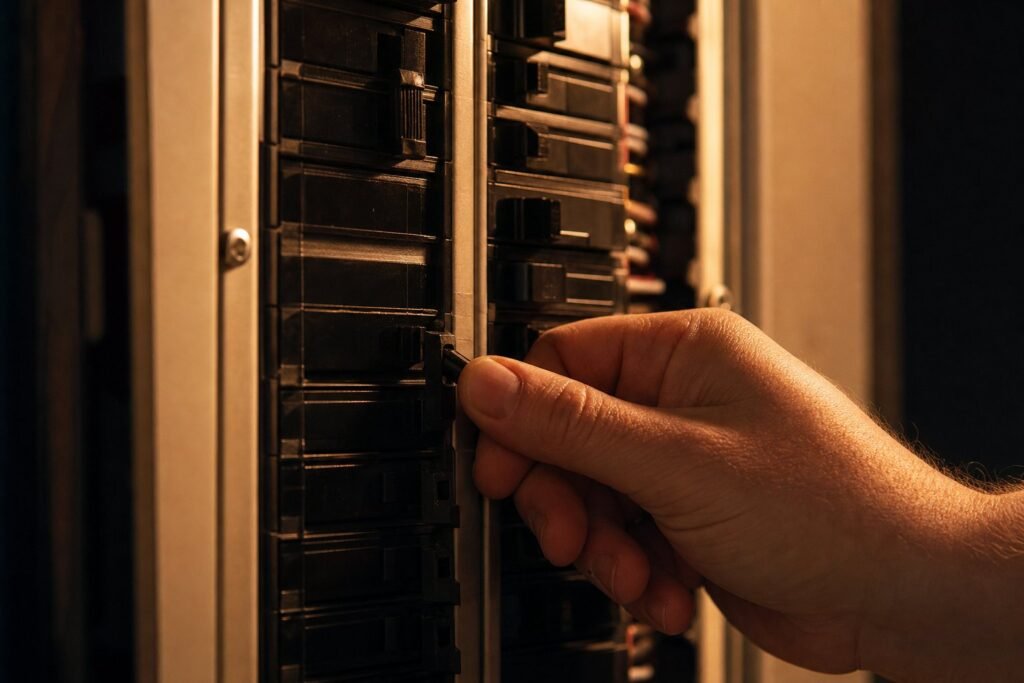
A breaker that keeps tripping has one of three causes: an overloaded circuit drawing more than its rating, a short circuit where hot touches neutral or ground, or a ground fault leaking current where it shouldn’t go. If trips happen across several circuits, or a breaker feels hot, won’t hold, or trips instantly on reset, the aging breaker or panel itself is the likely culprit.
In this guide
Is it a simple overload?
Overload is the most common and least sinister cause: the circuit’s appliances ask for more current than its rating, the wire warms, and the breaker does its job. The fingerprint is timing and pattern. Trips that arrive seconds to minutes after adding a load, and that reliably follow the same combination, space heater plus hair dryer, microwave plus toaster oven, are overload talking.
The safe homeowner move is redistribution: shift one heavy appliance to a different circuit and see whether the pattern breaks. That test costs nothing and diagnoses honestly. What never helps is a bigger breaker; the wire it protects doesn’t change size when the breaker does, and oversizing trades nuisance trips for heated conductors inside your walls.
| Cause | Telltale pattern | First safe step |
|---|---|---|
| Overload | Trips follow a repeatable appliance combination, with a delay | Move one big load to another circuit and retest |
| Short circuit | Instant trip the moment the breaker resets or a device switches on | Leave it off; unplug everything on the circuit before one careful retest |
| Ground or arc fault | GFCI or AFCI device trips, sometimes tied to moisture or one appliance | Test and reset the device once; note what was running |
| Failing breaker or panel | Multiple circuits misbehave, breaker is hot, weak, or won’t hold | Stop resetting and book a professional look |
Is it a short circuit?
A short is a collision: hot to neutral or hot to ground with almost no resistance in between, producing a current spike the breaker interrupts immediately. That immediacy is the tell. Reset the breaker and it snaps back off instantly, or the trip coincides exactly with plugging in or switching on one specific device.
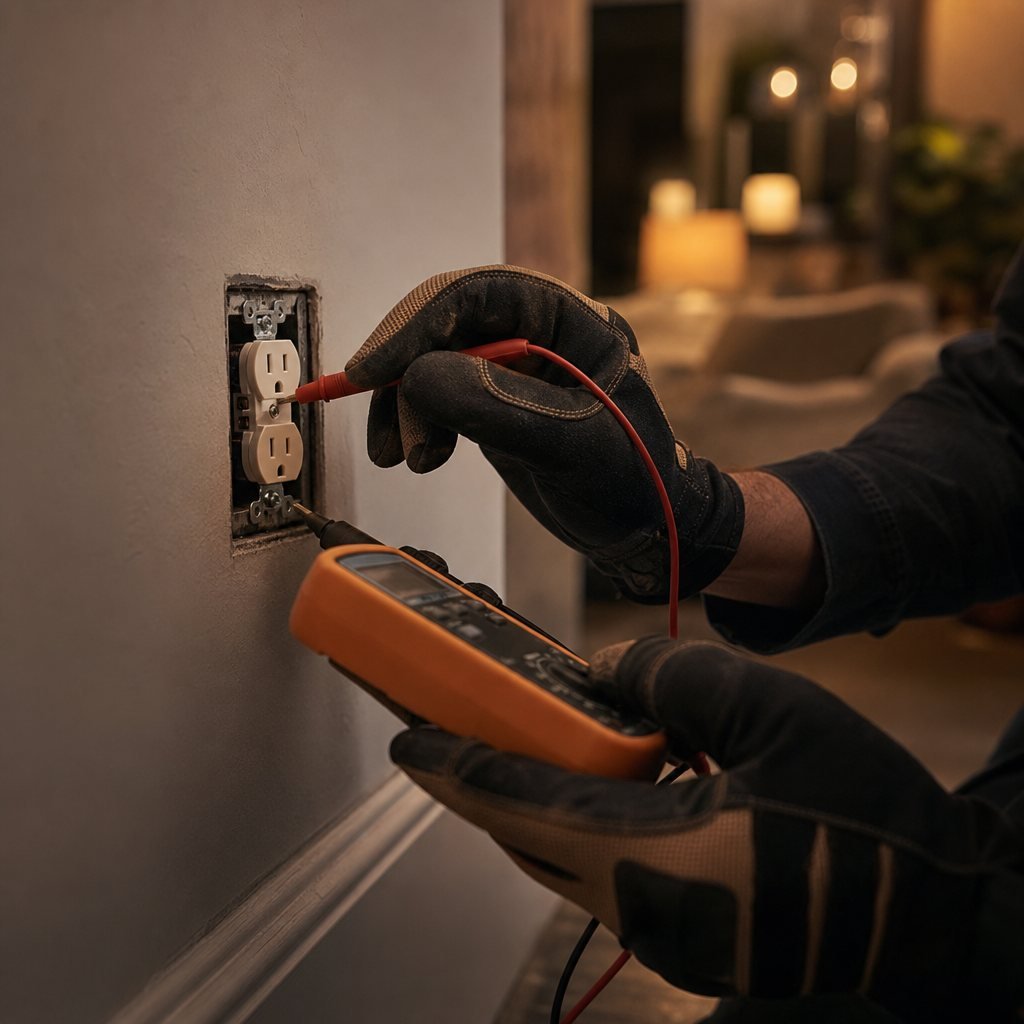
Homeowner diagnosis stops at subtraction: unplug everything on the circuit, reset once, and reintroduce devices one at a time. If a single lamp or appliance reproduces the trip, retire the device and the mystery ends cheaply. If the breaker trips with nothing plugged in, the fault lives in the wiring, and finding it is meter work, not guesswork. That’s where our repair and troubleshooting service earns its keep.
Is it a ground fault or arc fault?
GFCI and AFCI protection trip on subtler evidence than raw amperage. A ground fault means current is leaking off the intended path, classically through moisture or a compromised appliance, and GFCI devices catch it at tiny thresholds. Arc-fault protection listens instead for the electrical noise of arcing: damaged cords, loose terminations, staples through cable.
These trips cluster in kitchens, bathrooms, garages, and outdoor circuits. Note what was running and whether water was anywhere in the story. One reset is reasonable; a repeat trip is a report of a real leak or arc, and it deserves a professional reader. Aging appliances with tired motors are frequent offenders, and sometimes the honest fix is retiring an old freezer rather than rewiring anything.
When is the breaker or panel the problem?
Breakers are mechanical devices that wear out, and panels age with them. Suspect the equipment when the pattern goes diffuse: trips scattered across multiple circuits, a breaker that runs hot or hums, one gone weak and tripping far below its rating, or one that won’t hold with the whole circuit unplugged. In certain mid-century brands the failure runs the opposite direction, breakers that should trip and don’t: our nine signs you need a panel upgrade covers those equipment-side red flags in full.
Chronic tripping can also mean the house has outgrown its service: when winter loads stack, the circuits may be fine while total demand crowds the main. Whether that’s your situation is arithmetic, and our 100-amp versus 200-amp comparison shows how to read it.
A breaker that trips is annoying; a breaker that quietly stopped being able to trip is dangerous. Respect the first, replace the second.
When should you stop resetting and call?
The reset button is a diagnostic tool with a strict budget. Here’s the honest protocol:
- Reset once after removing or redistributing the suspected load.
- If it trips again promptly, stop. Repeated resets into a live fault pump heat into wiring you can’t see.
- Leave the breaker off if you notice heat, buzzing, or any burning odor at the panel, and make the call same-day.
- Note the pattern first: which breaker, what was running, how fast it tripped. Those details cut diagnostic time on arrival.
The free fix is real: a healthy share of tripping complaints end with rebalancing which outlets the big appliances use, at zero cost. We’d rather tell you that in one short visit than sell you equipment the house doesn’t need.
When the fault does live in the wiring, our electrical repair and troubleshooting service traces it with test equipment instead of parts-swapping. And when the diagnosis points at the panel itself, the panel and meter upgrade service takes over, with the complete panel upgrade guide showing everything that project involves before you commit.
Quick answers
Is it dangerous to keep resetting a tripping breaker?
Once is diagnosis; repeatedly is gambling. Each reset into an uncorrected fault sends another surge of heat through the failure point. A breaker that won’t hold after one thoughtful reset with loads removed is saying the problem remains, and the next step is testing, not persistence.
Why does my breaker trip only in winter?
Load stacking. Utah winters pile the furnace blower, space heaters, and extra dryer cycles onto circuits that idled all summer. Seasonal tripping usually means those circuits, or the whole service, run near capacity, and a load calculation shows which.
Do I need a whole panel upgrade just because one breaker trips?
Usually not. One circuit with one cause gets one fix: redistribute, repair, or replace that breaker. Panels enter the conversation when trips span circuits, the equipment shows age or heat, or the service is out of headroom. Diagnosis comes before hardware.
What if the breaker never trips but lights flicker and outlets are warm?
Treat that as more serious, not less. Warm outlets and persistent flicker with a silent breaker can mean a failing connection, or protection that has quietly lost its ability to trip. Skip the DIY on that combination and have it tested promptly.
Tired of the midnight walk to the panel? Describe the pattern and we’ll chase the cause, not the symptom.
Clearfield’s mix of 1950s originals and newer infill keeps our troubleshooting bench busy, and our Clearfield electrician page covers how we handle service calls there.