
Why Do My LED Lights Flicker?
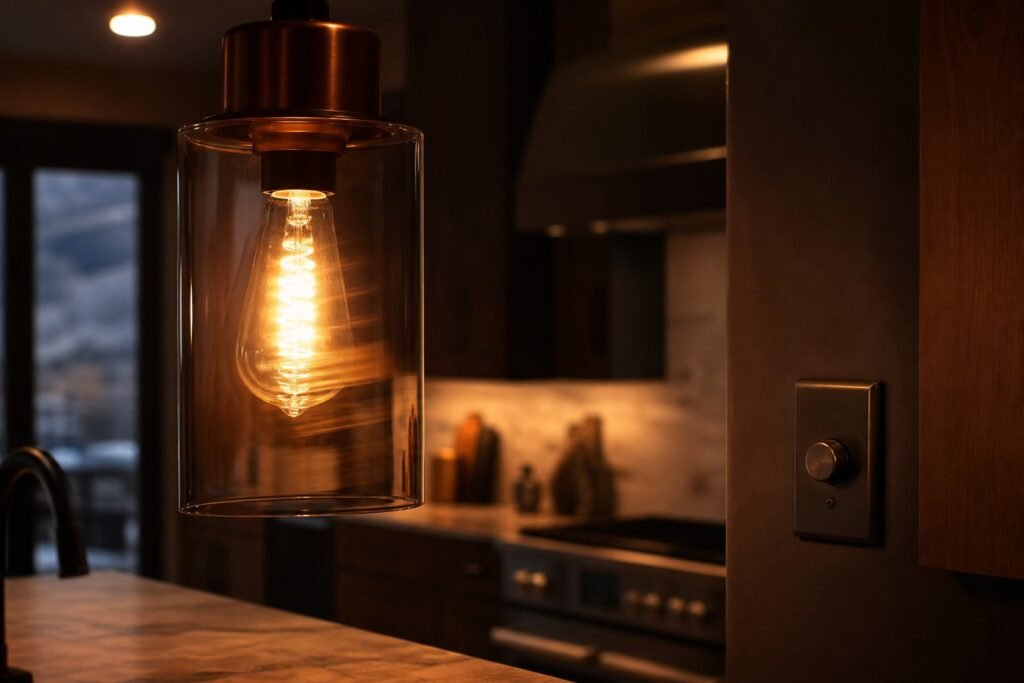
LED lights usually flicker because of an incompatible dimmer designed for incandescent bulbs, a cheap bulb with a poorly built driver, or a loose connection at the fixture, switch, or panel. Occasionally the cause is voltage fluctuation worth an electrician’s look. Dimmer and bulb fixes are cheap and DIY-friendly; loose connections and whole-house flicker deserve a licensed professional.
In this guide
Why do old dimmers make LEDs flicker?
A legacy dimmer dims by chopping slices out of the power waveform, which worked because an incandescent filament is just a glowing wire that averages out the interruptions. An LED bulb is different: a small electronic driver sits between the wall and the diodes, and when that driver receives chopped-up power it wasn’t designed for, it stutters. The result is flicker, shimmer at low settings, buzzing, or bulbs that glow faintly when switched off.
The fix is a dimmer rated for LEDs, marked CL or LED-compatible, matched against the bulb maker’s compatibility list when possible. Two details catch people: many dimmers specify a minimum load a couple of efficient LEDs won’t meet, and mixed bulb brands on one dimmed circuit dim at different rates, which reads as shimmer. Standardize the bulbs, replace the dimmer, and most LED flicker cases end right there. Dimmer selection for whole rooms is covered in our complete lighting upgrade guide.
Can a cheap bulb be the whole problem?
Yes, and it’s the easiest diagnosis in the trade. Inside every LED bulb, a driver converts household AC into the steady DC the diodes want, and bargain bulbs save money precisely there, with minimal smoothing that lets ripple leak through as visible or headache-grade invisible flicker.
The test costs nothing: swap a known-good name-brand bulb into the flickering socket. If the flicker leaves with the old bulb, you’re done, and the offender goes in the trash, not into another fixture. Decent bulbs with honest dimming ranges are the cheapest lighting upgrade that exists.
A five-dollar bulb problem should never get a five-hundred-dollar diagnosis, so test the bulb first.
When is flicker a loose connection?
When it’s irregular. Dimmer and driver flicker tends to be rhythmic and repeatable at certain dim levels; connection flicker is random, comes and goes with vibration or weather, and sometimes responds to jiggling the switch. A loose splice, a backstabbed receptacle giving up, worn switch contacts, or a loosening neutral interrupts current unpredictably, and every interruption at a bad joint makes heat.
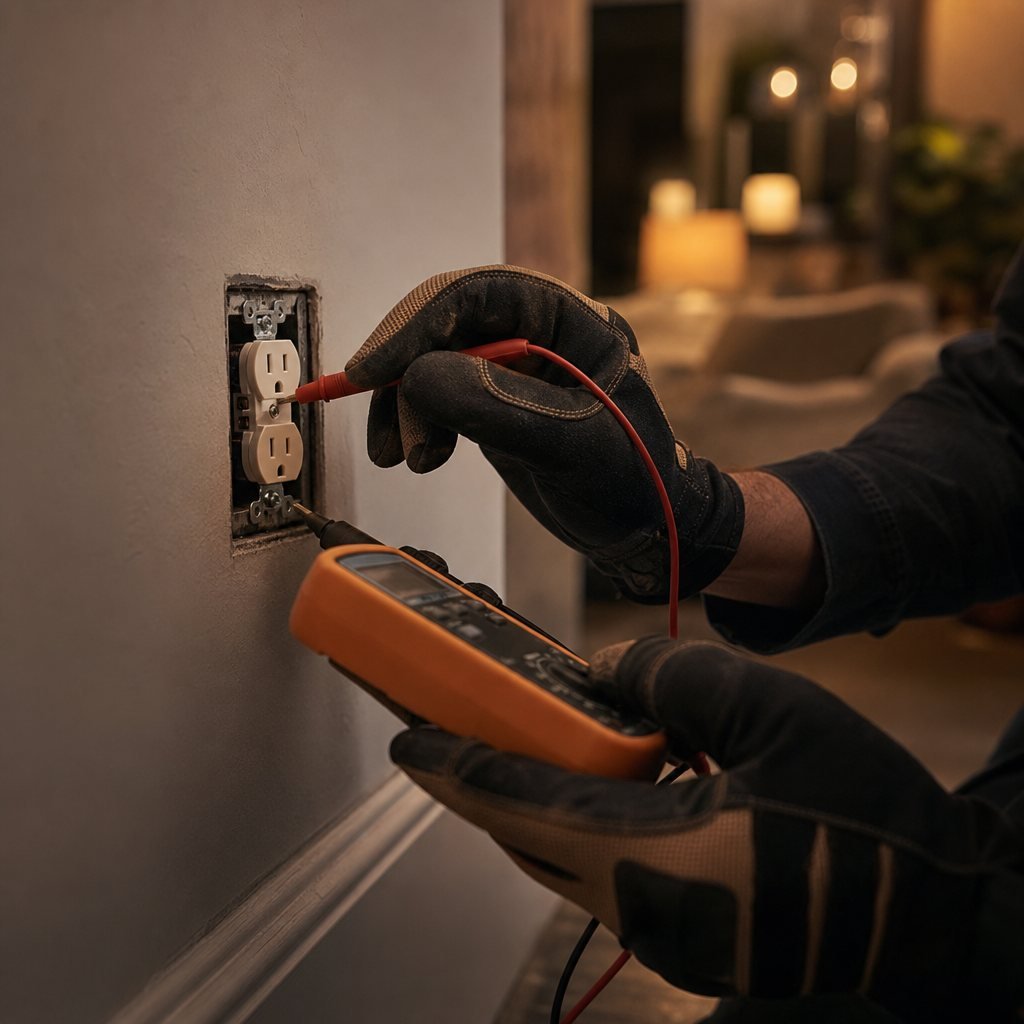
This is the category that matters, because a high-resistance connection is a fire mechanism, not a lighting nuisance. Loose neutrals in particular, at the panel or the utility connection, can send voltage swinging through the whole house. Anything beyond a simple bulb or dimmer swap here is diagnostic work with a meter, which is exactly what our electrical repair and troubleshooting service exists for.
Safety note: Flicker paired with a warm cover plate, buzzing, or any burnt smell is a same-day call, not a weekend project. Switch the circuit off at the breaker until it’s been checked.
Is it one fixture or the whole house?
Scope is the fastest triage there is, so place your flicker in this table before spending anything:
| What flickers | Most likely cause | Sensible next step |
|---|---|---|
| One bulb | The bulb or its socket | Swap in a known-good bulb |
| One dimmed circuit | Dimmer and LED mismatch | LED-rated dimmer, matching bulbs |
| One fixture, any bulb | Loose fixture splice or worn switch | Electrician checks the box and switch |
| One room or circuit, brief dips | Loaded circuit; motor start-ups | Note what appliance coincides; have it assessed |
| Whole house | Service or neutral problem | Electrician promptly; call the utility if severe |
The first two rows are homeowner territory; the bottom row is urgent. Whole-house flicker, especially with some lights bright while others dim, points at the service neutral, and that failure damages electronics and can start fires. The whole-house story, including what Rocky Mountain Power handles versus what an electrician does, is in our companion post on flickering lights causes.
When should you stop DIYing and call?
Work the cheap end of the list first, and stop the moment the pattern points past it:
- Swap a known-good bulb into the flickering socket and see if the problem follows the bulb.
- Check the dimmer: if it isn’t LED-rated, replace it and standardize the bulbs on that circuit.
- Map the scope: one bulb, one circuit, or the whole house, and note what appliances coincide.
- Then stop. Flicker that survives steps one and two, spans circuits, or arrives with heat, buzzing, or smells is meter work.
And skip the DIY entirely in the classic Ogden special: an older home where prior owners’ wiring choices are already a mystery. Flicker in a house with 1970s aluminum branch circuits or crumbling fixture splices is a symptom worth one professional hour . New dimmers or fixtures that come out of that visit are what our lighting installation and upgrades service handles, and our post on recessed lighting installation covers the dimmer pairing that keeps flicker out of new work.
Quick answers
Why do my LEDs flicker only when dimmed low?
That’s the signature of a dimmer working below its comfortable range: either a legacy dimmer chopping power an LED driver can’t smooth, or an LED dimmer under its minimum load. Raise the dimmer’s low-end trim if it has one, standardize the bulbs, or replace the dimmer with a model listed for your bulb count and brand.
Why do my lights flicker when the furnace or AC kicks on?
A brief dip when a big motor starts is common and usually harmless: the startup surge momentarily pulls voltage down. If the dip is new, worsening, or happens with small appliances too, the circuit or a connection deserves assessment rather than a shrug.
Can flickering lights really be a fire risk?
The flicker itself isn’t, but one of its causes is: a loose or corroded connection that heats every time current crosses it. Random flicker unrelated to dimming, warm switch plates, buzzing, or any burnt smell moves the situation from annoyance to safety issue, and it should be diagnosed promptly rather than watched.
Do smart bulbs flicker on regular switches?
They misbehave on dimmers, because a smart bulb wants full constant power and dims itself internally. Never put a smart bulb on a dimmed circuit; give it a standard switch left on, or pair it with a matching smart switch. On a plain switch, a flickering smart bulb is most likely just a defective bulb.
Flicker that survived a bulb swap and a dimmer check deserves a meter. We diagnose it honestly and fix only what needs fixing.
From the Avenues to the east bench, Ogden’s older housing gives flicker more hiding places than most cities. If yours is doing it, our Ogden electrician page covers how we troubleshoot in this housing stock every week.