
Ceiling Fan Installation in Ogden, UT
Fans hung on properly rated boxes, new switch legs for separate light and fan control, and safe work on vaulted and high ceilings, across Weber, Davis, Morgan, Box Elder, and Cache counties.
- Licensed & Insured
- Fan-Rated Boxes
- Vaulted Ceilings OK
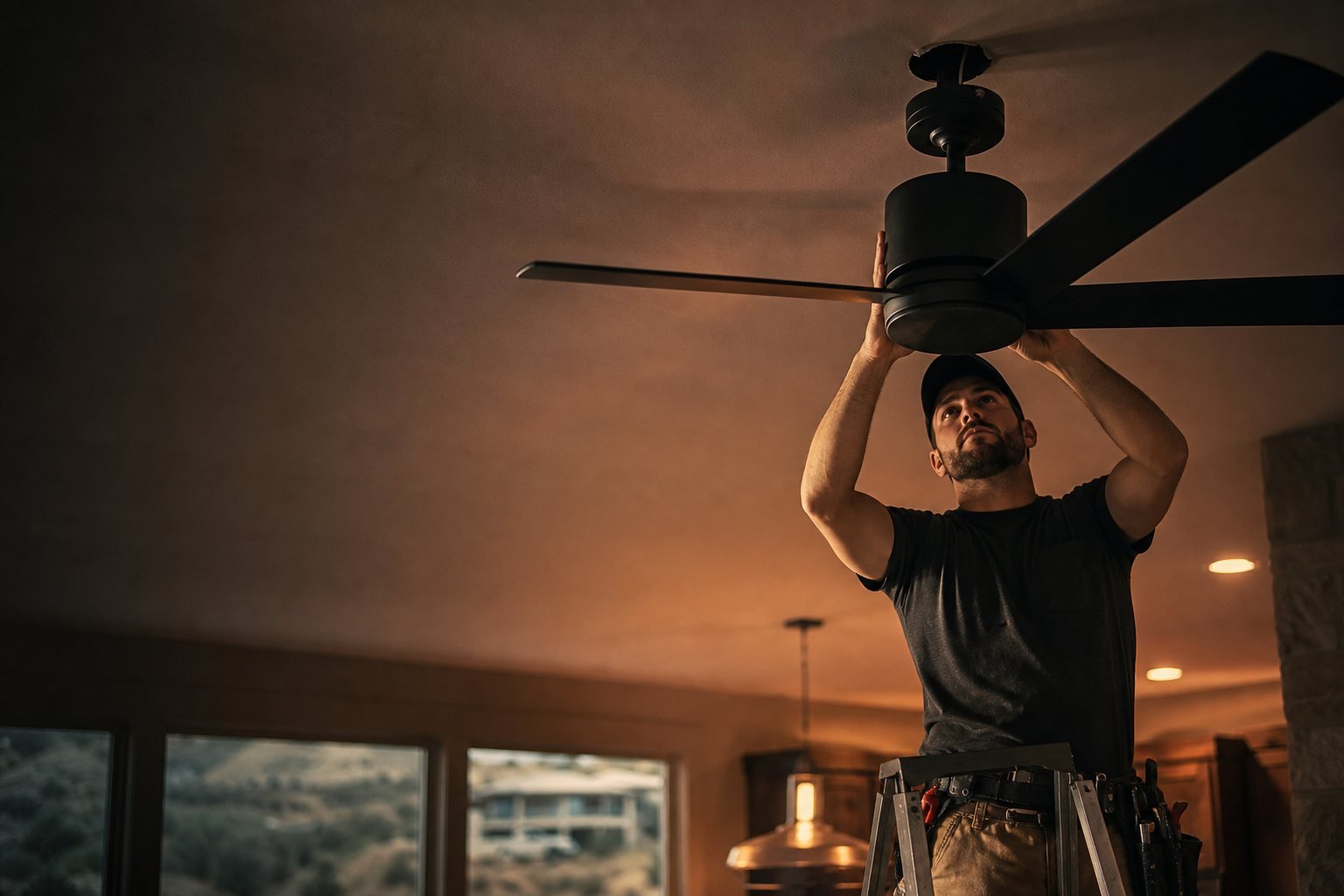
What does ceiling fan installation involve?
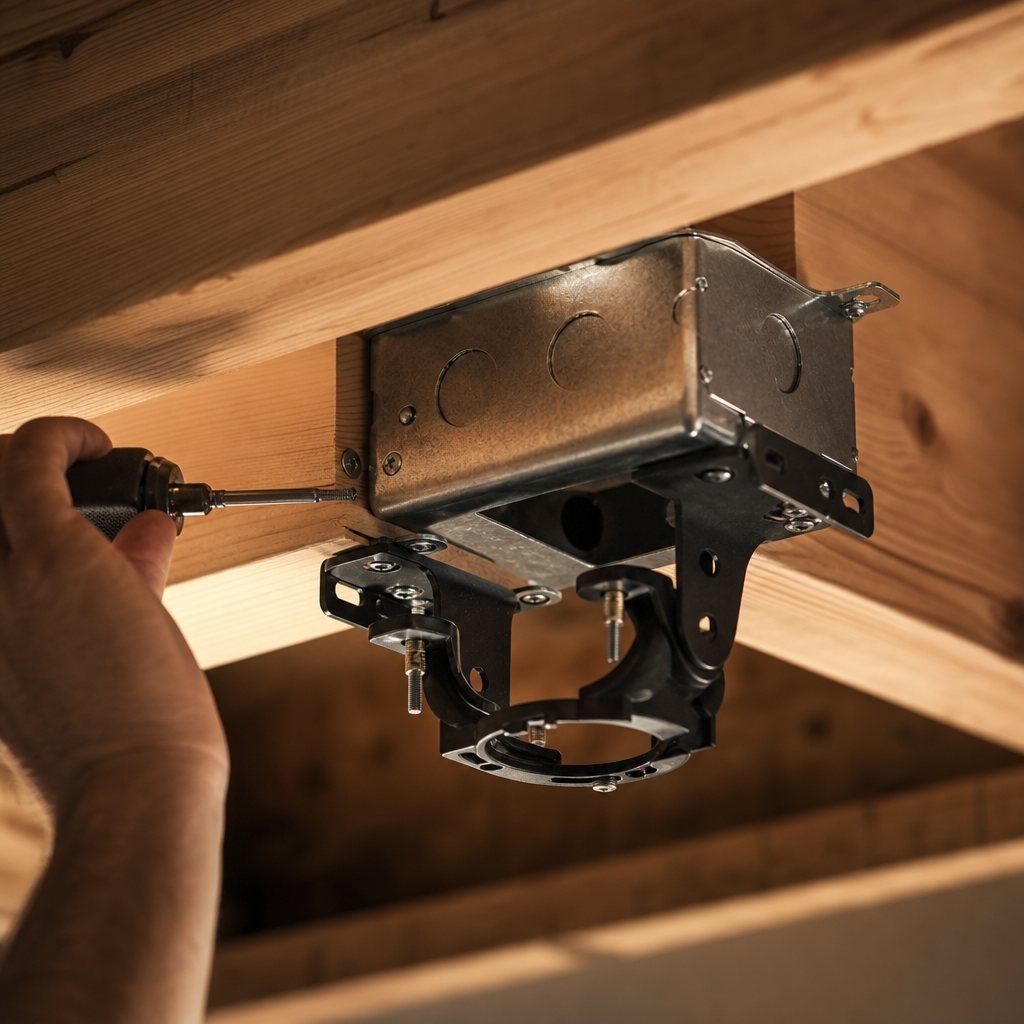
A proper ceiling fan installation starts inside the ceiling, not at the fan: the electrical box must be rated to carry a spinning, vibrating load, because a standard light-fixture box eventually works loose under a fan’s weight and motion. From there it’s balanced mounting, correct downrod length for the ceiling height, and switching that controls fan and light separately. Copperview Electric installs, replaces, and repairs ceiling fans across the Ogden area, including on vaulted and high ceilings where the ladder work stops being a DIY job.
When is it time for fan work?
Some of these are comfort calls, and two of them are safety calls wearing a comfort costume. Here’s what brings Ogden homeowners to us:

What’s included in a Copperview fan install
Whether it’s replacing a dated fixture with a fan or hanging one where nothing hung before, the job includes:
- Verification, or installation, of a fan-rated box or brace
- New wiring and switch legs where the plan needs them
- Correct downrod sizing for ceiling height and pitch
- Assembly, hanging, and blade balancing
- Separate fan and light switching, or smart control
- Remote and wall-control pairing and programming
- Vaulted and high-ceiling work with proper equipment
- A wobble-free test at every speed before we leave
How our fan installation works
Room & ceiling check
Ceiling height, pitch, joist layout, and whether a rated box already exists up there.
Quote
One itemized number covering box work, wiring, switching, and the hang itself.
Box & wiring
A fan-rated box or brace goes in, plus any new switch legs the controls need.
Hang & balance
Assembly, mounting, downrod, and blade balancing at every speed.
Controls & test
Switches, remotes, or smart pairing programmed, then a full-speed shake-free test.
Standard box vs fan-rated box: why it matters
This is the detail that separates a safe installation from a slow-motion problem. The two boxes look similar from below, and only one of them is designed to hold a machine that spins for thousands of hours.
| Standard light box | Fan-rated box or brace | |
|---|---|---|
| Designed for | A static fixture that hangs still | A rotating, vibrating load, listed for fan support |
| Weight rating | Light fixtures only | Fans, and heavy fans with light kits |
| Under vibration | Screws and box work loose over years | Braced to joists, engineered to stay tight |
| How you can tell | You usually can’t, from below | Marked and listed for fan support, verified at install |
| The fix | Not a fan mount, no matter how solid it feels today | What we install or verify on every fan job |
Fan repairs: when to fix and when to replace
A wobble, a hum, or a dead speed setting doesn’t automatically mean fan shopping. Balancing kits, replacement capacitors, and new blade irons rescue plenty of fans, and a solid mid-range fan with a failed part is usually worth the fix.
The honest math changes when the motor bearings are gone, the fan was bargain-tier to begin with, or the mounting underneath needs redoing anyway. In that case, putting repair money toward a quality replacement on a proper box is the better spend, and we’ll tell you which side of that line your fan sits on before any work starts.
How much does ceiling fan installation cost in Ogden?
A straightforward replacement, where a rated box and wiring already exist, is close to a standard service call, which across Utah typically runs $75 to $150 plus the work itself. New locations, box retrofits, added switch legs, and high ceilings each add labor honestly.
What moves the number
Hanging more than one? Multi-fan visits price better per fan. Send the list and we’ll quote the bundle.
Hung safe, balanced right, by a licensed electrician
A ceiling fan is the only appliance in your home that hangs over people while moving. That’s reason enough to insist on rated mounting, proper wiring, and a licensed hand on the ladder. Copperview Electric is licensed and insured, installs to the National Electrical Code as adopted in Utah, and doesn’t leave until the fan runs true at every speed.
Fan installs across Northern Utah
Summer valley heat makes fans one of our steadiest requests, from Ogden bungalows to Davis County great rooms with ceilings worth a proper ladder.
Ceiling fan questions, answered
Why does my ceiling fan wobble?
Minor wobble usually means unbalanced blades, fixable with a balancing kit and patience. Pronounced wobble often points at the mount: a loose downrod, worn blade irons, or a box that was never rated for a fan. We check the mount first, because that’s the version with consequences.
Can I put a fan where a light fixture is now?
Usually yes, and it’s our most common fan job. The catch is the box: light boxes aren’t rated for fans, so part of the install is fitting a fan-rated brace, which we can typically do through the existing opening without opening the ceiling.
What size fan does my room need?
Blade span should follow room size: smaller bedrooms suit around 42 to 48 inches, standard bedrooms and offices 52 inches, and large living spaces 56 inches and up. Ceiling height matters too, which is what downrod length is for. We’ll size it when we see the room.
Do ceiling fans actually lower cooling bills?
Fans cool people, not rooms: the breeze lets you set the thermostat a few degrees higher with the same comfort, and that’s where savings come from. The habit that makes it work is turning fans off in empty rooms.
Can you install a fan on a vaulted ceiling?
Yes. Vaulted and angled ceilings need a downrod sized to the pitch, sometimes an angled-mount adapter, and honest ladder equipment. It’s routine work for us and squarely not a weekend DIY at fourteen feet.
My fan hums. Is it dying?
Not necessarily. Hums often come from a failing speed capacitor, a cheap aftermarket remote receiver, or loose blade hardware, all fixable. A grinding or bearing noise is more serious. We’ll diagnose which noise you have and price the fix against replacement honestly.
Should the fan run in winter too?
Yes, reversed. Winter mode runs the blades clockwise on low, pulling air up and pushing the warm ceiling layer back down the walls. In rooms with vaulted ceilings it makes a difference you can feel at ankle height.
Read up before you spend a dollar
Upgrading Your Home’s Lighting
Fans, fixtures, dimmers, and layered light, planned room by room.
Read the guide ExplainerCeiling Fan Installation, Explained
Fan-rated boxes, braces, switch wiring, and what high ceilings change.
Read the guide Quick answerWhy LED Lights Flicker
The dimmer mismatch explained, and when flicker means a real problem.
Read the guideWork that pairs with fan installs

Lighting Installation
Fans and lighting share ceilings; plan them together.
Learn more
Outlets & Switches
Separate switching and smart controls for fan and light.
Learn more
Repairs & Troubleshooting
Dead speeds and mystery switches, diagnosed properly.
Learn more
Remodel & Renovation
New rooms deserve fans planned in from rough-in.
Learn more