
Backup Power for Utah Homes: The Complete Generator Guide
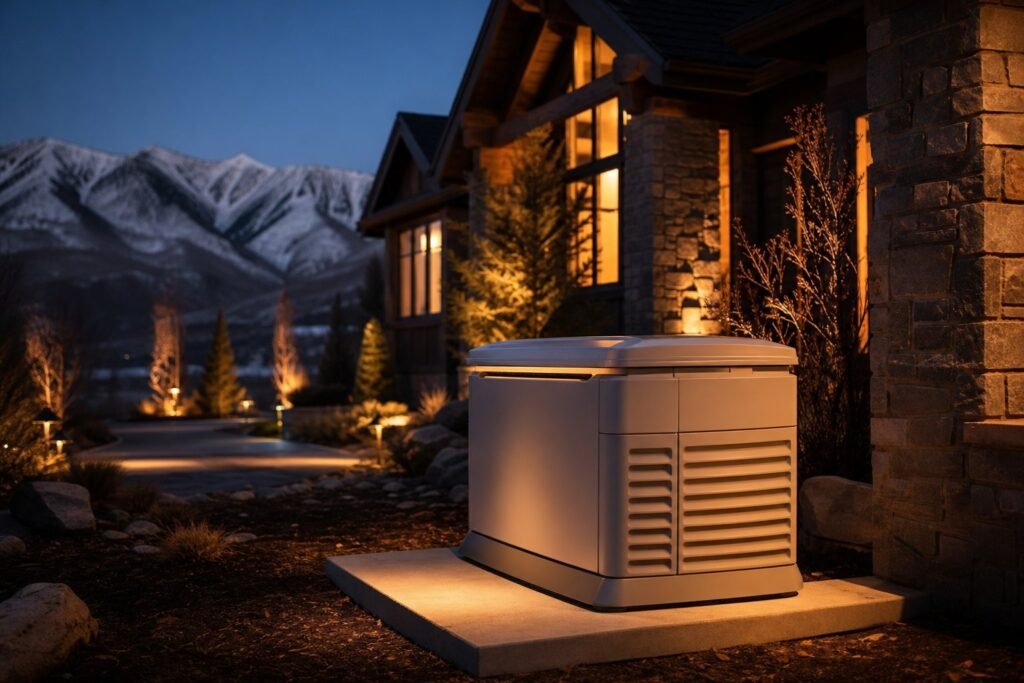
Backup power for a Utah home comes down to four decisions: standby or portable, which fuel, whole-house or essential circuits, and how the generator connects to your panel. Get those four right and the canyon wind that flattens your neighborhood’s power becomes a non-event at your house. This guide walks each decision in order, explains what installation and permitting look like along the Wasatch Front, and is honest about the homes that shouldn’t spend the money at all.
In this guide
- Why Utah homes lose power
- Standby or portable: the first fork
- Natural gas, propane, or gasoline
- Whole house or essential circuits
- What size you actually need
- Transfer switches and the dryer-outlet danger
- How auto-start behaves in a real outage
- How long a generator will actually run
- The install process, permits, and inspection
- What backup power costs
- When a generator is the wrong purchase
- Quick answers
Why do Utah homes lose power in the first place?
Along the Wasatch Front, two weather patterns cause most of the outages worth planning for. The first is the east canyon wind: when a strong pressure gradient sets up over the mountains, air accelerates down through Weber Canyon and Ogden Canyon and hits the bench neighborhoods below at highway speeds and beyond. Notable events have produced gusts near hurricane strength on the benches from South Ogden through Uintah and down into Davis County. Wind like that takes trees into lines, peels shingles, and can leave whole feeders dark for hours or days.
The second pattern is the winter storm: heavy, wet snow loading branches and conductors, followed by cold that makes the outage genuinely uncomfortable fast. A summer thunderstorm or a car into a pole rounds out the list, but wind and snow are the events that separate homes with a backup plan from homes without one.
Restoration is Rocky Mountain Power’s job, and crews generally work from the largest circuits toward the smallest. That means a main feeder through Ogden may come back in hours while a spur serving a bench street or an Ogden Valley road waits considerably longer. Your backup plan should be sized to the long tail, not the average: the question is not whether you can survive a ninety-minute blip, it’s whether your furnace, refrigerator, and sump pump can ride out a day or two.
Whatever hardware you land on, a little preparedness multiplies its value. Before the next wind advisory, it is worth having in place:
- A refrigerator plan: a closed fridge holds safe temperatures for about four hours and a full freezer for a day or two, which sets your urgency clock.
- Fuel on hand: stabilized gasoline or a filled propane tank, rotated on a calendar rather than a memory.
- A tested connection: run the generator under load once a season, so the first pull of the cord is never during the storm itself.
- Charged basics: lights, phone batteries, and the garage door release everyone forgets until the opener is dead.
Plan for the outage that lasts two days, and the two-hour one takes care of itself.
Standby or portable: which type of generator fits your house?
A standby generator is permanently installed outside the home on a pad, wired into your electrical system through an automatic transfer switch, and fueled by natural gas or propane. When the grid drops, it starts itself and picks up your circuits without anyone touching anything. A portable generator is a wheeled machine you store in the garage, roll out when the power fails, fuel by hand, and connect either to extension cords or, far better, to a professionally installed inlet on the house.
The honest shorthand: standby buys automation and capacity at a five-figure project price, while a portable paired with the right connection hardware protects the essentials for a fraction of that. Households with medical equipment, frequent travel, or a finished basement that floods without a sump pump lean standby. Households that mostly want the furnace and refrigerator covered during a wind event usually get more value from the portable route. We compare the two in depth, including the in-between option most people have never heard of, in our standby vs portable breakdown.
Either way, the connection to the house, not the machine itself, is where an electrician earns their keep. Our generator and backup power service handles that side for both types: inlets, transfer equipment, dedicated circuits, and the standby installs themselves.
Which fuel should your generator run on?
Fuel choice shapes everything downstream: runtime, storage, maintenance, and how much attention the machine demands mid-outage. Three options cover the residential market.
Natural gas is the default for standby units anywhere Dominion Energy serves, which is most of Weber and Davis counties. The supply never runs out mid-storm, there is nothing to store, and the gas grid stays up through almost every event that takes the electric grid down. The trade-offs are a modest power derate compared to propane and the need for a gas line with enough capacity, which sometimes means upsizing the meter or running new pipe.
Propane serves homes beyond the gas mains, common in the Ogden Valley and rural Morgan and Box Elder counties. It stores indefinitely in an on-site tank, burns clean, and starts reliably in cold weather. Runtime is bounded by tank size, so the tank becomes part of the sizing conversation.
Gasoline is the portable-generator fuel: cheap machines, fuel available on any corner, and real limitations. Gas goes stale in months without stabilizer, carburetors gum up when the machine sits, and refueling means pouring flammable liquid outdoors in the exact weather that caused the outage. Many newer portables run on both gasoline and propane, which quietly fixes the storage problem.
| Fuel | Supply during an outage | Storage | Cold-weather behavior | Typical use |
|---|---|---|---|---|
| Natural gas | Continuous from the utility main | None needed | Excellent; no fuel to thicken | Standby units on the gas grid |
| Propane | Limited by on-site tank size | Indefinite shelf life in tank | Very good; regulator sizing matters | Standby or portable, off the mains |
| Gasoline | Whatever you have in cans | Months at best without stabilizer | Fair; hard starts when cold | Portables only |
Whole-house backup or essential circuits only?
This is the decision that moves the budget more than any other, and the industry default answer, whole-house, is frequently the wrong one. Whole-house backup means the generator and transfer equipment are sized to carry your entire panel: every light, every outlet, the air conditioner, the oven, all of it, exactly as if the grid never blinked. It is genuinely seamless and genuinely expensive, because the generator must be sized for your worst simultaneous load rather than your actual outage needs.
Essential-circuits backup takes the opposite approach: you and your electrician pick the loads that matter in a real outage, typically the furnace, refrigerator, freezer, sump pump, a few lighting circuits, the internet equipment, and maybe a well pump, and only those transfer to generator power. The rest of the house waits for the grid. A smaller generator, smaller fuel demand, and a smaller install cover the things you would actually miss.
A useful test: walk your house and write down what you touched during the last outage. Almost nobody reaches for the double oven. Most Utah families discover their true outage life runs on eight to twelve circuits, and sizing to that reality instead of the panel label routinely cuts the project cost by thousands.
There is also a hybrid worth knowing: a standby generator sized for essentials, feeding a protected-loads subpanel through its automatic transfer switch. You keep the hands-off start and the piped fuel, but the machine, the switch, and the gas demand all shrink to match the circuits that count. For homes that want automation without whole-house money, it is frequently the best-value standby configuration on the quote sheet.
What size generator do you actually need?
Size follows directly from the whole-house-or-essentials decision, and it is a load calculation, not a guess at the store. Essential-circuits homes commonly land in the range of 7 to 14 kilowatts for a standby unit, or 5,000 to 8,000 running watts for a portable. Whole-house backup for a home with central air usually starts around 18 to 26 kilowatts.
The wrinkle that catches people is starting load: motors draw a hard surge for the first moment they spin up, so a furnace blower or well pump needs breathing room beyond its running number. Oversizing has its own costs, though, both in purchase price and in how the engine runs when lightly loaded. The arithmetic, a wattage table for the common essentials, and the oversizing trap are all laid out in what size generator do I need.
What does a transfer switch do, and why is the dryer-outlet trick dangerous?
A transfer switch is the piece of equipment that makes generator power legal and safe. It sits between your panel and your circuits and enforces one rule mechanically: the house is connected to the grid, or to the generator, never to both. Automatic versions do the changeover themselves; manual versions and interlock kits put a deliberate human step in the middle. The full comparison, including the budget-legal interlock option, is in our transfer switch guide.
Now the danger. Every neighborhood has someone who skips the transfer switch by plugging a generator into a dryer outlet with a homemade double-male cord, the so-called suicide cord, to push power backward through the panel. Without an isolating switch, that power does not stop at your walls. It flows out through your meter into the utility transformer, which steps it up to distribution voltage, thousands of volts, onto lines that a Rocky Mountain Power crew believes are dead. Line workers are killed this way. It is illegal, it voids insurance, and when the grid snaps back it can destroy the generator and start a fire at the panel.
Safety line. If a generator connects to your house through anything other than a listed transfer switch, interlock, or inlet installed under permit, disconnect it. No outage is worth energizing a line someone is about to touch bare-handed.
The transfer equipment also has to match the panel behind it. Plenty of Wasatch Front homes still run 60 to 100-amp panels from the postwar building booms, and some of those need attention before any transfer switch bolts on. Our electrical panel upgrade guide covers how to tell which era and condition yours is in.
How does auto-start behave when the power actually fails?
A standby generator watches utility voltage continuously through its automatic transfer switch. When the grid drops or sags badly, the controller waits a few seconds to make sure the outage is real rather than a flicker, then cranks the engine, lets it come up to speed and stabilize, and transfers your circuits. From your side of the wall the sequence is a short blackout, commonly well under a minute end to end, then the hum of the machine and the lights back on.
When utility power returns, the switch does the same dance in reverse: it verifies the grid is stable, transfers the house back, then runs the engine unloaded for a brief cooldown before shutting off. Between outages the unit exercises itself, typically a weekly self-test of several minutes, which is both how it stays ready and how you know it still works. If the weekly hum ever stops happening, that silence is your maintenance alarm.
Portables have no auto-start; someone has to be home, roll the machine out, start it, and throw the manual transfer. That single fact, more than any spec sheet number, is what the standby premium actually buys.
One related feature worth putting on the spec sheet: many standby controllers pair with an app that reports exercise results, run history, and fault codes to your phone. For a machine whose entire job is to work while nobody is watching, that visibility is cheap insurance against discovering a problem during the outage instead of before it.
How long will a generator actually run?
Runtime is a fuel question first and a maintenance question second. A natural-gas standby runs as long as the gas main feeds it, which for practical purposes means the length of the outage. The limit becomes engine care: manufacturers call for oil checks during extended runs and oil changes on the order of every one to two hundred run hours, so a multi-day event means lifting the hood, not just listening to it hum.
Propane runtime is tank arithmetic. A common residential tank in the 250 to 500 gallon range can carry an essential-circuits load for several days, with the exact figure depending on generator size and how heavily it is loaded. If backup power is the tank’s job, winter fill scheduling becomes part of the plan.
Gasoline portables run 8 to 12 hours on a tank at moderate load as a broad rule, which means a real outage involves refueling in the dark, with cans you filled before the storm. Budget the cans, the stabilizer, and the discipline to rotate the fuel twice a year, or the machine will let you down at the exact moment it was bought for.
What does installation involve, including permits and inspection?
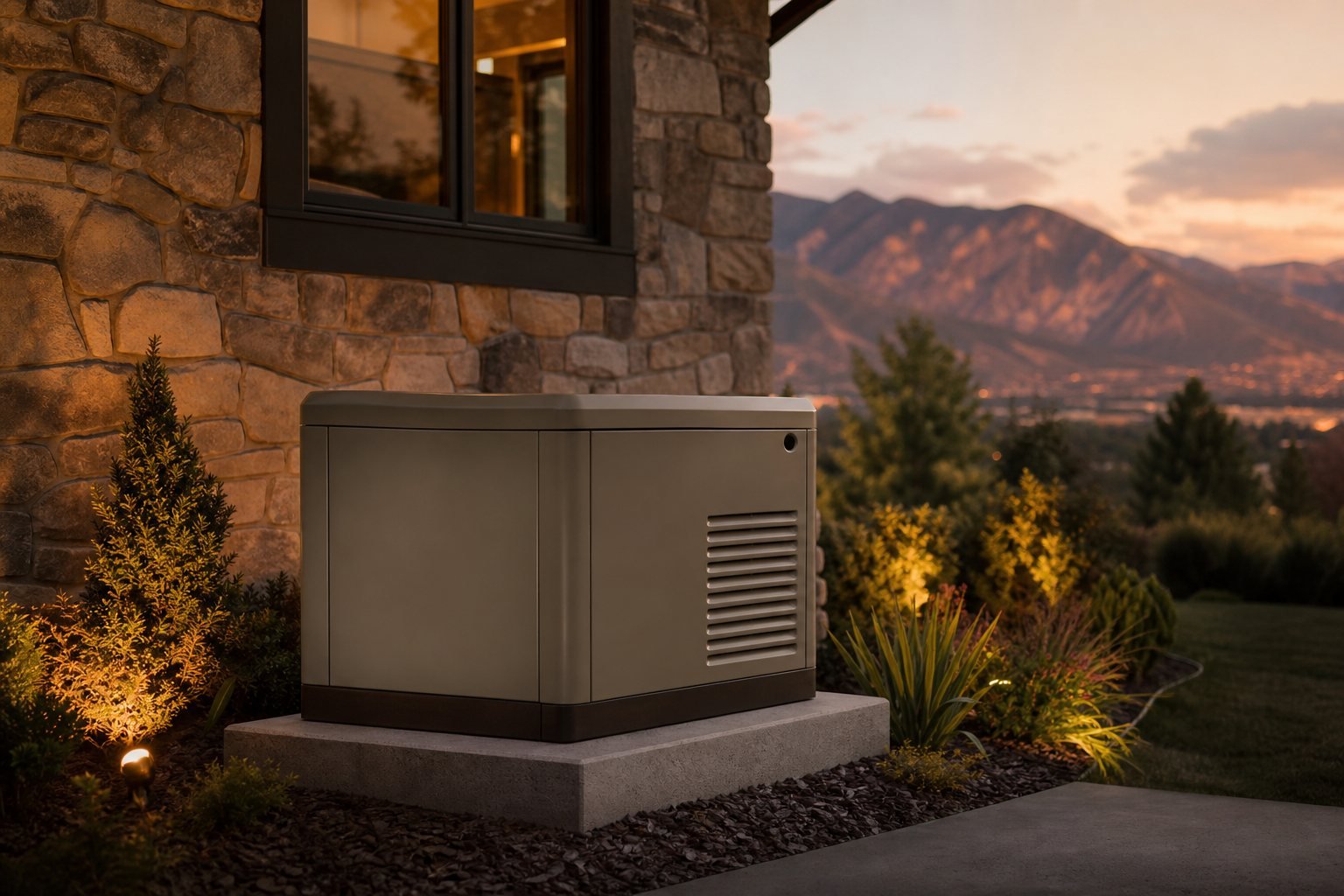
A standby install is a small construction project that touches electrical, gas, and your city’s building department, and a portable-inlet setup is a shorter permitted electrical job. Here is the standby sequence as it actually unfolds in Weber and Davis county cities:
- A site visit and load calculation settle the size, the circuit list, and where the unit can legally sit: manufacturers and code set clearances from windows, doors, vents, and property lines.
- An electrical permit is filed with your city, and gas work is permitted alongside it. This is not optional paperwork; it is what makes the system insurable and sellable later.
- The pad and placement go in: a composite or concrete base, set to the required clearances, with service access on all sides.
- The gas line is run or upsized. Generators are hungry appliances, and an undersized line starves the engine exactly when every other gas appliance in the neighborhood is also running hard.
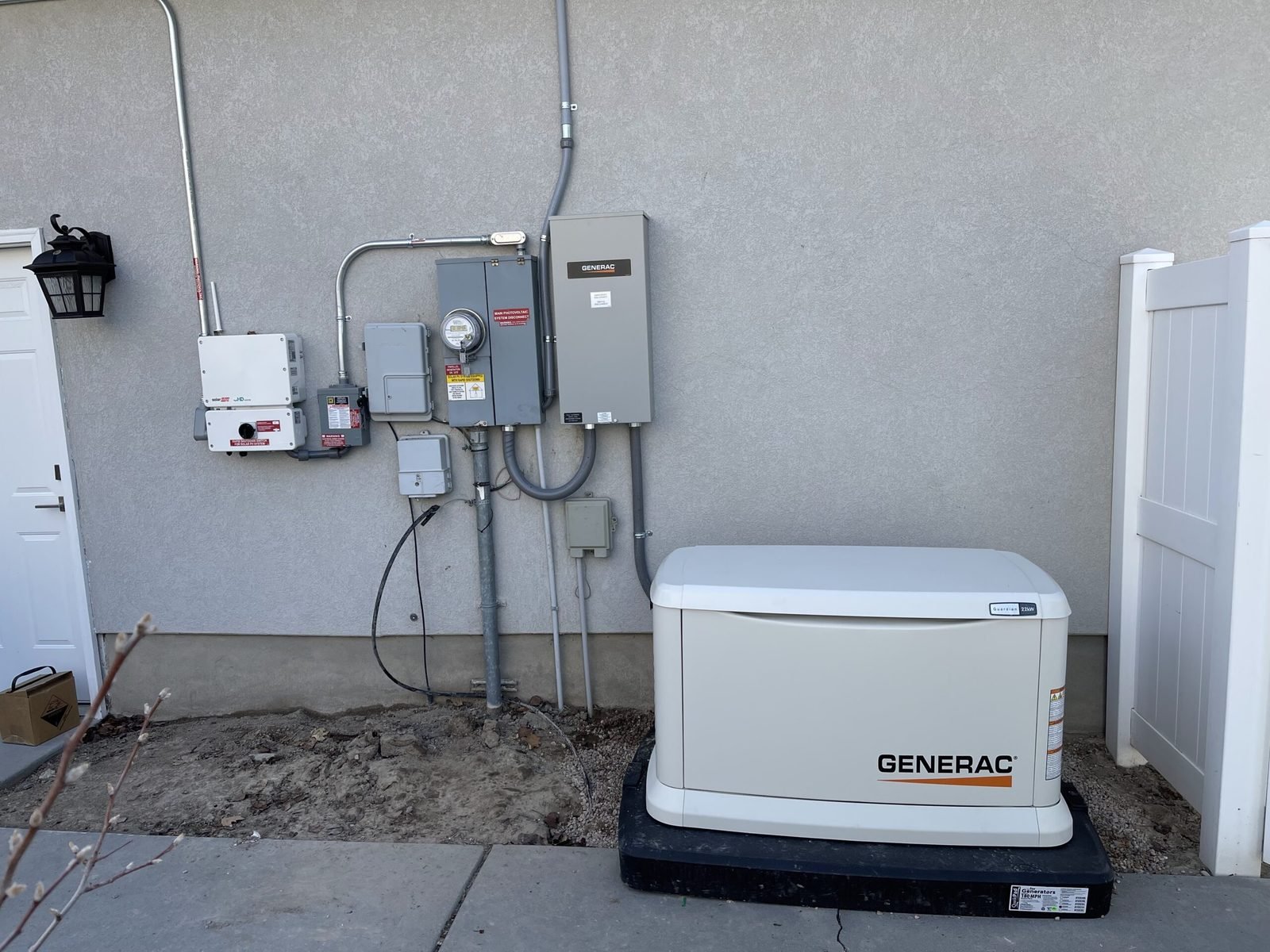
- The electrical work lands: the automatic transfer switch is mounted at the panel, the selected circuits are routed through it, and control wiring connects switch to generator.
- The city inspection reviews the electrical and gas work and closes the permits. Where the service equipment is touched, utility coordination is scheduled as well.
- A commissioning run simulates an outage end to end, and you watch the whole sequence work before anyone leaves.
Timelines run from a single day for an inlet-and-interlock job to several visits for a full standby system. Our backup power installation service coordinates the permits, the gas trade, and the inspection so the only thing you schedule is the site visit.
What does backup power cost in Utah?
Two honest tiers cover almost every home. The portable route, a quality generator plus a professionally installed inlet and manual transfer setup, commonly totals in the low thousands, with the installed electrical side often running $500–$1,500 and the machine itself sold separately. A whole-home standby system commonly lands at $10,000–$20,000 or more all-in for the unit, pad, gas line, transfer switch, and electrical.
What moves the number inside those ranges: distance from the gas meter, whether the panel needs work first, siting complications, and generator size. Those are all knowable before you commit, which is why the quote, not the internet range, is the real number. The full breakdown lives in our generator cost guide, and pricing for your specific house starts with a phone call.
One budgeting note that surprises people in a good way: the two tiers are not mutually exclusive. An inlet and interlock installed this year still earn their keep if a standby follows in five, so starting small is a sequence, not a dead end.
When is a generator the wrong purchase?
Some houses should not buy backup power yet, and a few should not buy it at all. If your neighborhood has lost power twice in a decade, both times for under an hour, a standby generator is an expensive machine that will spend its life exercising weekly for an event that rarely comes. A camping-style inverter generator and a transfer plan, or simply a fridge strategy and some lanterns, may be the rational answer.
Skip the standby, too, if the panel it would connect to is the real problem. Money spent automating backup for a failing or obsolete panel is money spent in the wrong order; the panel work comes first, and sometimes fixing it is the whole fix. And if what you are actually experiencing is flickering, dimming, or circuits dropping while the rest of the street stays lit, that is not an outage problem at all, it is a house wiring problem, and our home electrical problems guide is the better starting point.
The exception that overrides the frugality: medical equipment, oxygen, powered mobility, or refrigerated medication in the house. In those homes, automatic backup is not a comfort purchase, and we will say so plainly.
Quick answers
Can I install a standby generator myself in Utah?
The generator is only part of the job; the transfer switch, panel connections, and gas line are permitted work that cities along the Wasatch Front inspect. A homeowner can handle site prep and the purchase, but the gas and electrical connections belong with licensed trades. Unpermitted backup systems surface at home sale and in insurance claims, usually at the worst possible time.
Will a generator run my air conditioner?
Only if it was sized for it. Central air is one of the largest loads in the house, with a heavy starting surge, so essential-circuits systems usually leave it out. Whole-house systems and larger standbys carry it fine. In practice, most Utah outages worth planning for are wind and winter events, when heat matters and cooling usually does not.
How loud is a standby generator?
Modern residential standbys run at roughly conversation-to-lawn-mower loudness from a few feet away, commonly in the 60s of decibels, and placement rules keep them off bedroom walls and property lines. During its weekly exercise you will hear it; during an outage your neighbors will mostly hear their own silence.
Does a natural gas generator work if the power is out for days?
Yes. The gas distribution system does not depend on your electrical service and stays up through nearly all outage events. Multi-day runs shift the concern to engine maintenance: checking oil and following the manufacturer’s extended-run service intervals.
Do I need a permit for just a portable generator?
The generator itself, no. The moment it connects to your home wiring, yes: the inlet, the interlock or manual transfer switch, and the panel work are permitted electrical installations. Extension cords straight to appliances need no permit, but they also cannot run your furnace, which is hardwired.
How often should a standby generator be serviced?
Follow the manufacturer schedule: typically an annual service of oil, filter, and plugs, plus attention after any long run. The weekly self-exercise is your ongoing health check. A standby that skips maintenance fails the same way smoke detectors with dead batteries do: silently, and discovered at the worst moment.
What happens if the generator is running when the power comes back?
With a proper transfer switch, nothing dramatic: the switch senses stable utility voltage, moves the house back to the grid, and shuts the generator down after a cooldown. The two power sources never touch. This is exactly the collision the transfer switch exists to prevent, and why code requires one.
Where can a standby generator legally sit on my lot?
Placement follows the manufacturer’s listing and local code: set distances from operable windows, doors, and fresh-air intakes, clearance from the structure and property lines, and service access around the unit. Tight side yards on Wasatch Front lots are a common complication, and siting is one of the first things a site visit settles.
Want a straight answer on what backup power should look like for your house, including the answer “less than you think”? One site visit and a load calculation settle it, with a written quote and no pressure.
Copperview Electric is based in Ogden and installs backup power across Weber, Davis, Morgan, Box Elder, and Cache counties. If you are in the city itself, our Ogden electrician page covers how we work in the local housing stock, from the Avenues-era bungalows to the bench homes that catch the worst of the canyon wind.