
What Size Generator Do I Need for My House?
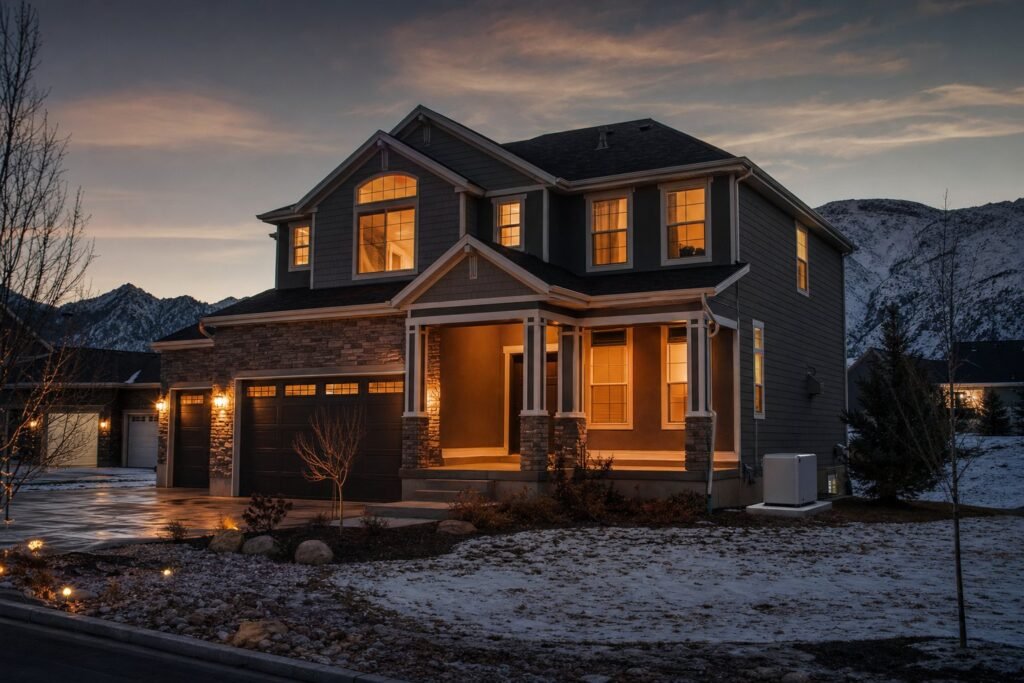
Size to the loads you actually need in an outage, not to the whole panel. For most homes running essential circuits, that lands around 7–14 kW for a standby or 5,000–8,000 running watts for a portable. Add up your must-run essentials, allow surge room for the largest motor, and let a load calculation give the real number before you buy.
In this guide
How many watts do the essentials actually draw?
The loads that matter in a Utah outage are a shorter list than most people expect. Typical figures for common equipment, which vary by model and are exactly what a load calculation pins down:
| Essential load | Running watts (typical) | Starting surge (typical) |
|---|---|---|
| Furnace blower (gas heat) | 400–800 | 1,200–2,400 |
| Refrigerator | 150–400 | 900–1,200 |
| Chest freezer | 100–300 | 500–1,000 |
| Well pump (rural homes) | 1,000–2,000 | 2,000–4,000+ |
| Sump pump | 600–1,000 | 1,300–2,900 |
| Lights and wifi (LED era) | 150–400 | n/a |
Sum a realistic set, furnace, fridge, freezer, sump, lights, and internet, and the running total sits near 2,000–3,500 watts. That is why a mid-size portable in the 5,000–8,000 watt class handles most essential-circuit homes with margin, and why rural houses with well pumps sit a class higher. The connection hardware that lets any of this reach hardwired loads is covered in our transfer switch guide.
Your outage life is a handful of circuits. Size to that life, not to the panel label.
What is the difference between starting and running watts?
Running watts are the steady draw once equipment is going; starting watts are the brief surge a motor demands in its first moment of spin-up, often two to four times its running figure. Compressors and pumps, the refrigerator, the well pump, the sump, are the surge culprits; resistive loads like LED lights barely surge at all.
The sizing rule that follows: add up all running watts, then add the single largest starting surge on your list, because motors rarely all start in the same instant. A setup that carries 3,000 running watts with a well pump needing a 4,000-watt surge wants roughly 7,000 watts of capability, which is exactly how a home “too small” on paper runs fine, and how a generator that looked adequate stalls every time the fridge and sump hit together.
Quick method. Three steps get you a defensible number before anyone visits:
- List every load that must run in an outage and note its running watts from the nameplate or manual.
- Add the largest single starting surge on the list to the running total.
- Buy at least 20 percent above that figure, and confirm with a load calculation before final purchase.
What about sizing for whole-house backup?
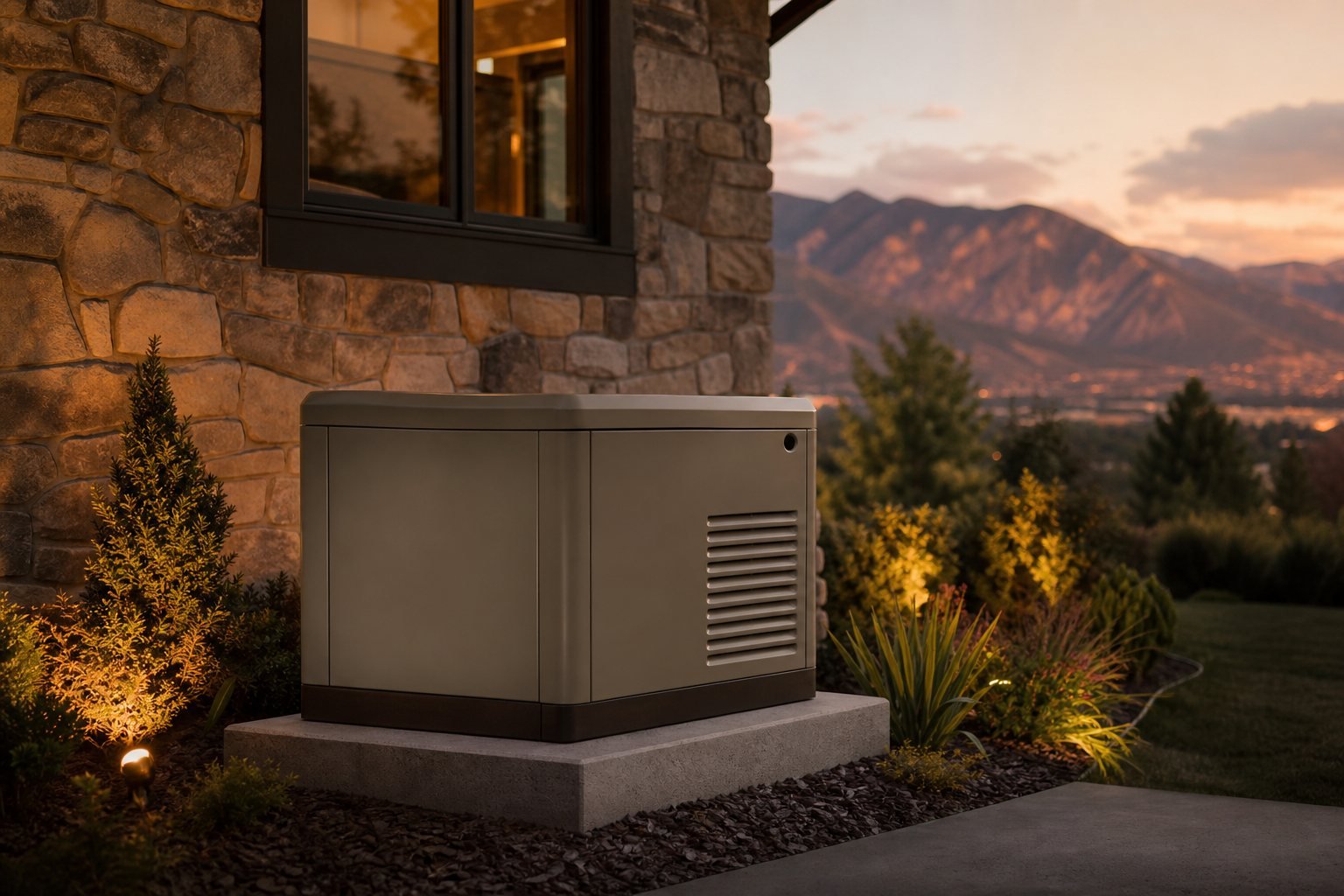
Whole-house sizing abandons the wish list and sizes to the service: the generator and automatic transfer switch must carry anything the house could plausibly run at once, including air conditioning, which is the load that pushes homes into the 18–26 kW class. That is a formal load calculation under the electrical code, not an estimate, and it is part of any legitimate standby quote. Whether whole-house coverage is even worth buying is a fair question, and our Utah generator guide and standby vs portable comparison both make the case that essential circuits are the smarter target for most homes.
Why is oversizing a trap?
Bigger is not safer, it is just more expensive twice. The first cost is obvious: every step up in generator class raises the price of the unit, the transfer equipment, and the fuel supply feeding it. The second cost is quieter: engines are built to work under load, and a large generator idling along at a small fraction of its rating runs cool, burns fuel incompletely, and gunks itself up over time, the same family of problems diesel mechanics call wet stacking. An oversized machine costs more to buy, more to feed, and ages worse than one sized to its real job.
The honest sizing conversation sometimes lands on a smaller, cheaper machine than the homeowner walked in wanting, and that is a good outcome, not a downgrade. When you are ready to put hardware behind the number, our generator and backup power service starts with the load calculation, not the sales sheet.
Quick answers
Will a 7,500-watt generator run my whole house?
It will run the parts of your house that matter, which is different and usually better. Through a transfer switch feeding essential circuits, 7,500 watts covers furnace, refrigeration, sump, lights, and electronics with surge room. It will not carry central air or a whole panel unmanaged; that is standby territory.
How do I find the wattage of my appliances?
Check the nameplate sticker or the manual: watts directly, or amps times volts. For motor loads, note both running and starting figures where listed. A clamp-meter reading during a service visit pins down anything ambiguous, and a load calculation assembles it into a defensible total.
Do I size a generator differently for a well pump?
Yes, and it is the load most rural buyers under-plan. Well pumps combine high running draw with the steepest starting surge in the house, often the single number that sets your minimum size. Get the pump’s horsepower and depth details into the load calculation before choosing a machine.
Is it bad to run a generator at full load?
Brief full-load stretches are fine; living at the redline is not. Continuous operation near maximum shortens engine life and leaves no surge room, so the next motor start stalls the machine. The comfortable target is meaningful load with margin, which is exactly what right-sizing produces.
Want the number instead of the range? A load calculation on your actual circuits takes one visit and settles the size before you spend a dollar on hardware.
We run sizing and load calculations across Weber, Davis, Morgan, Box Elder, and Cache counties. Layton homeowners can start with our Layton electrician page for local service details.