
Standby vs Portable Generators: Which Fits Your Home and Budget
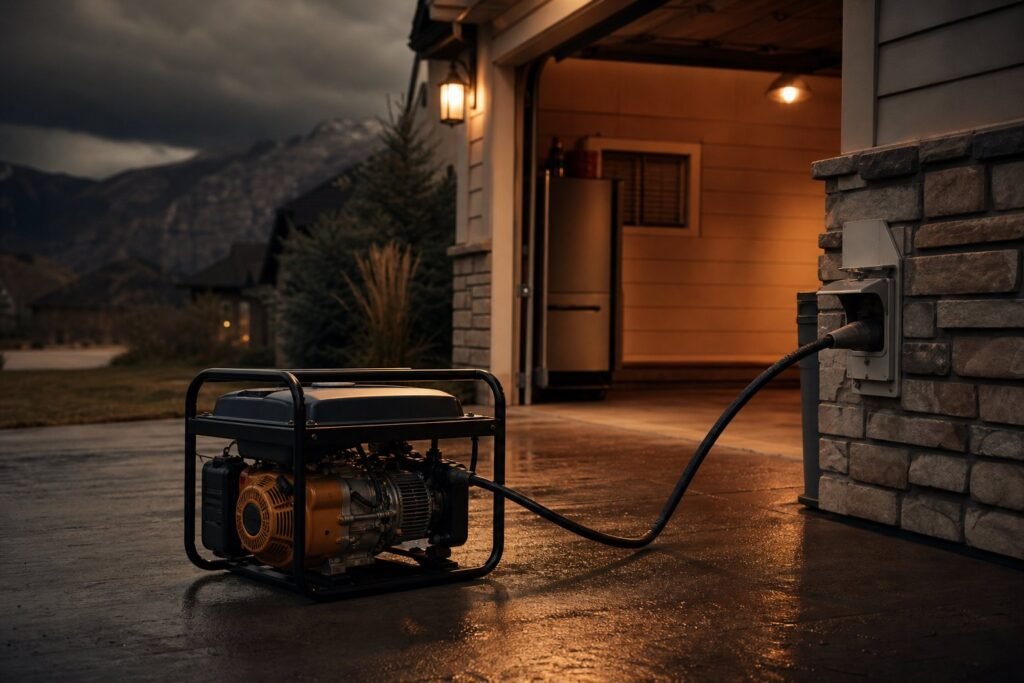
A standby generator starts itself, runs on the gas line, and can carry the whole house; a portable costs a tenth as much and covers the essentials if, and only if, it connects through proper transfer equipment. The right pick depends on budget, how often your area loses power, and whether anyone is home to start a machine. There is also a middle path that most Utah homeowners never get told about, and it is often the best value on this page.
In this guide
How does a standby generator work?
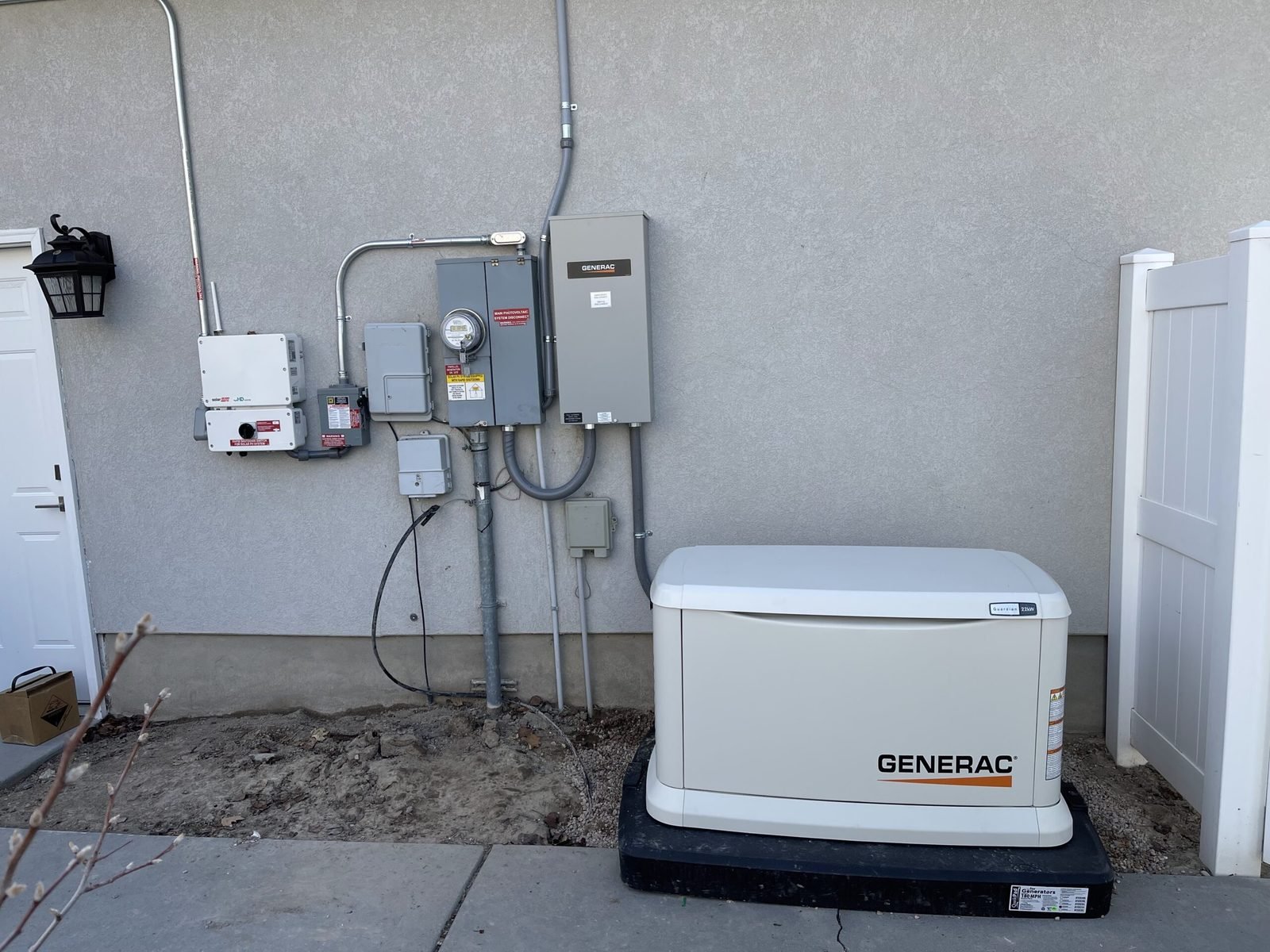
A standby unit is a permanent appliance: an engine and alternator in a weatherproof enclosure, bolted to a pad beside the house, plumbed to natural gas or propane, and wired to your panel through an automatic transfer switch. It monitors utility voltage around the clock. When the grid fails, it starts on its own, and the transfer switch moves your circuits onto generator power in well under a minute, whether you are home, asleep, or out of state.
That autonomy is the entire product. Fuel arrives by pipe, so nobody hauls cans. A weekly self-test keeps the engine exercised and flags problems early. The costs of all this convenience are real, though: the unit, the pad, the gas work, the transfer switch, and the permits add up to a five-figure project for most homes, and the machine needs annual service like any engine. The full decision tree around these systems starts in our Utah generator guide.
How does a portable generator work?
A portable is an engine on wheels that you own the labor for. When the power fails, someone rolls it out of the garage, positions it a safe distance from the house, fuels it, starts it, and connects the loads. Done crudely, that means extension cords snaked through a window to the fridge. Done properly, it means plugging one heavy cord into a wall-mounted inlet, flipping a manual transfer switch or interlock, and running actual house circuits, including the hardwired furnace that extension cords can never reach.
Portables run on gasoline, and increasingly on propane as well, which solves the stale-fuel problem that kills more portable generators than wear ever does. The machine demands a person: to start it, to refuel it every shift, and to carry the one non-negotiable safety rule, which is that it runs outdoors, far from windows and doors, every single time. Carbon monoxide from portable generators kills people in storms every year, and it is entirely preventable with placement.
Placement rule. Run a portable a good twenty feet from the house with the exhaust pointed away, never in a garage, even with the door open. Pair it with battery CO alarms inside. The generator’s job is to keep your family comfortable, not to gamble with the one hazard it carries.
How do standby and portable compare, honestly?
| Standby | Portable (with inlet setup) | |
|---|---|---|
| Typical all-in cost | $10,000–$20,000+ | Roughly $1,500–$3,500 including the machine |
| Convenience | Automatic; works when nobody is home | Manual; someone starts and connects it |
| Runtime | As long as the gas main flows, with maintenance | 8–12 hours per tank, then refuel |
| Fuel | Natural gas or propane, delivered by pipe or tank | Gasoline or dual-fuel propane, hauled by you |
| Noise | Enclosed and steady, placed by code | Louder, open-frame; inverter models much quieter |
| Realistically powers | Essentials up to the whole house, sized to order | Essentials: furnace, fridge, sump, lights, wifi |
| Weekly attention | Self-tests on its own | You run it monthly and rotate fuel, or it fails you |
Read the last row twice. The most common portable-generator failure is not mechanical, it is neglect: a machine that sat for three years with old gas in the carburetor will not start in the storm it was bought for. A standby automates the discipline; a portable outsources it to you.
A standby buys automation. A portable buys capability and hands you the responsibility.
What is the middle path most homeowners miss?
Between the $800 machine on extension cords and the $15,000 automated system sits the setup we recommend more than any other: a quality portable generator, a weatherproof power inlet mounted outside, and a manual transfer switch or interlock at the panel. Here is what an outage looks like with that hardware in place:
- Roll the generator to its spot outside and start it.
- Connect one rated cord from the generator to the wall inlet.
- At the panel, flip the interlock or transfer switch from utility to generator.
- Turn on the circuits you need: furnace, refrigerator, sump, kitchen lights, internet.
- When the grid returns, reverse the steps and roll the machine back into the garage.
Ten minutes of work, legal and inspected, and the furnace runs on a night the grid does not. The installed electrical side of this setup commonly runs $500–$1,500, which is why we call it the budget sweet spot: most of a standby’s real-world benefit at a small fraction of the price. The switch hardware choices are covered in our transfer switch guide, and matching the machine to your circuit list is the subject of our generator sizing answer.
Who genuinely should not buy a standby?
We install standby systems and still talk a fair number of people out of them. Skip the standby if outages in your area are rare and short: the machine will spend a decade exercising weekly for events a portable would have shrugged off. Skip it if the budget only stretches to the unit by cutting the gas or electrical work to the bone, because a starved gas line or an undersized transfer switch turns a premium product into a headache. Skip it if you rent, obviously, and think hard if you plan to move within a few years: standbys return some value at resale, but rarely what they cost.
The standby earns its price when nobody is reliably home to run a portable, when medical equipment or a flood-prone basement raises the stakes of a missed outage, or when the outage pattern in your specific spot is long and frequent. Those cases are real, and our backup power service quotes them straight, but they are the minority of the houses we visit.
What do Utah outage patterns actually favor?
Bench neighborhoods below Weber and Ogden canyons take the east wind hardest, and those events can stretch from hours into days when damage is widespread. Valley-floor subdivisions with newer underground service see far fewer interruptions. The Ogden Valley, Eden, Liberty, and Huntsville, sits at the far end of the restoration map, where a smaller crew count and mountain access mean the same storm produces a longer wait. Your own street’s history is the best data you have: two long outages in five years argues for more capability than a decade of clean service does.
Translated into hardware: valley-floor homes are usually well served by the portable-plus-inlet path, bench homes should weigh runtime seriously, and Ogden Valley homes are where the standby argument is strongest, especially on propane beyond the gas mains. The whole framework, fuels, sizing, and installation, is laid out in the complete generator guide.
Quick answers
Can a portable generator run my furnace?
Yes, and this is the main reason to install an inlet and transfer switch. Furnaces are hardwired, so no extension cord can reach them; the blower itself draws a manageable amount that nearly any household portable can carry once it is connected through the panel legally.
Are inverter generators worth the extra money?
For many homes, yes. Inverter models run dramatically quieter, sip fuel by throttling to the load, and produce clean power that is kind to electronics. The trade is price per watt. For an essentials-only setup that runs a furnace, fridge, and wifi, a mid-size inverter unit is a very livable machine.
How long does a standby generator last?
Serviced on schedule, residential standbys are commonly rated for a couple of decades of normal standby duty, with engine life measured in the low thousands of run hours. Since most units run only exercises plus occasional outages, maintenance habits, not run time, usually decide their lifespan.
Can I just use extension cords instead of an inlet?
For a fridge and some lamps, yes, run safely through a doorway with the generator well outside. But cords cannot reach hardwired loads like the furnace or a sump pump, they create trip and pinch hazards, and the juggling act gets old by hour six. The inlet setup exists because cords stop being charming quickly.
Do standby generators need to be exercised?
They exercise themselves: a programmed weekly or biweekly self-test spins the engine for several minutes. Your job is to notice if the routine hum ever stops, and to keep the annual service appointment. A quiet exercise day is the earliest warning you will get.
Torn between the tiers? Tell us your outage history and your circuit wish list, and we will quote the cheapest setup that honestly covers it.
We install both paths across Weber, Davis, Morgan, Box Elder, and Cache counties. Up in the Ogden Valley, where restorations run longest, our Eden electrician page covers how we approach backup power for homes beyond the gas mains.