
How Much Does EV Charger Installation Cost in Utah?
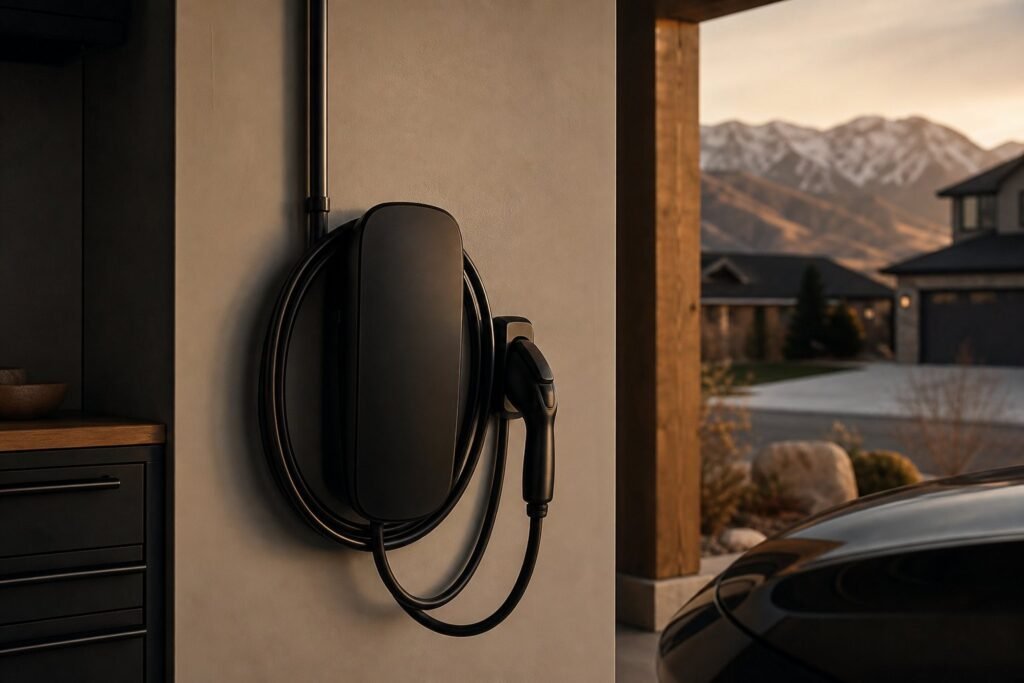
Most Level 2 EV charger installations in Utah cost $1,200–$3,200 all-in. Three things swing the number: distance from the panel to the parking spot, whether your panel has spare capacity, and the charger unit you choose. Short run, healthy panel, mid-range unit lands near the bottom; long runs and panel work push toward the top.
In this guide
What does a legitimate quote include?
Everything, in one written number: the dedicated 240-volt circuit (breaker, wire, and the run to your parking spot), the connection (hardwired or a heavy receptacle), mounting and commissioning of the unit, the city permit, and the inspection that closes it. If the charger unit itself is included, the quote should say which model; quality wall units typically run $350–$800 if you’re buying your own.
Watch for the two quiet omissions: the permit (its absence usually means nobody plans to pull one) and the amperage (a “charger install” at an unstated size isn’t comparable to anything). Our EV charger installation quotes are fixed, itemized, and sized off a real load calculation.
What moves the price up or down?
| Factor | Pushes cost down | Pushes cost up |
|---|---|---|
| Wire run | Charger mounts near the panel | Opposite end of the house, finished walls |
| Panel condition | Spare capacity, room for the breaker | Full panel, load management, or upgrade needed |
| Connection type | Hardwired unit | Plug-in receptacle with required GFCI breaker |
| Amperage | 16–32A circuit | 48A circuit and its heavier wire |
| Location | Garage interior | Outdoor mount, trenching, or detached structure |
The expensive install is rarely the fancy charger. It’s the long walk between the panel and the parking spot.
The wire run deserves the emphasis, because homeowners consistently underestimate it. Heavy-gauge copper is expensive per foot, and routing it through finished space takes hours that an exposed garage wall doesn’t. Choosing a mounting spot one bay closer to the panel is frequently worth a few hundred dollars.
Good to know: the GFCI breaker that code requires for a plug-in receptacle can cost several times a standard breaker, which is why a hardwired unit sometimes costs less installed than a plug-in, despite feeling like the premium option.
When does a panel upgrade join the bill?
When the load calculation says your service can’t absorb the charger’s continuous draw, and the smaller fixes don’t fit your plans. A downsized charger or a load-management device solves many tight panels for far less; when a true upgrade is warranted, Utah 100-to-200-amp projects commonly run $1,500–$3,000 on top of the charger work.
Get the paths priced side by side before deciding. A hundred dollars of load-management hardware against two thousand of service upgrade is an easy call for a one-EV household; the math flips for a home adding a heat pump next year. The full capacity logic is in the complete EV charger installation guide.
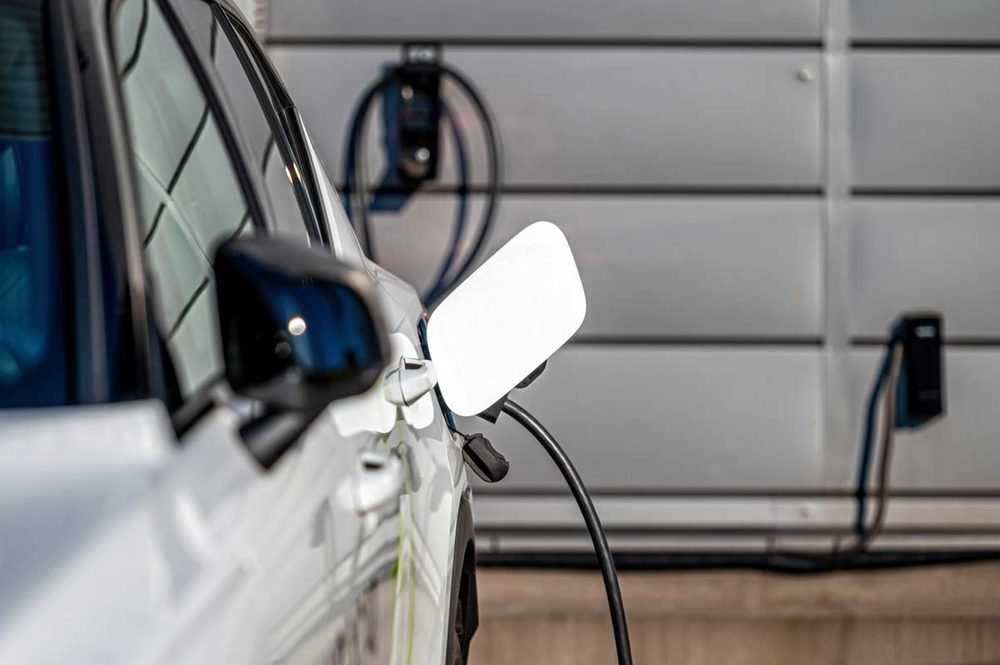
Hardwired vs plug-in: the cost angle
The instinct says plug-in is the budget path, and the instinct is often wrong. The plug-in route needs a heavy receptacle plus the code-required GFCI breaker; the hardwired route skips both and connects the unit directly. On many installs those cancel out or tip in hardwiring’s favor, and hardwiring is the only path to 48-amp charging anyway.
Plug-in earns its keep when portability is the point: renters with landlord approval, owners planning a move, or anyone who wants to take the unit to the next house. Pay for flexibility if you’ll use it; don’t pay for it by default.
When the right budget is zero
If your daily driving sits under roughly 30 miles and the car sleeps at home nightly, the Level 1 cordset already in your trunk covers you at no install cost, indefinitely. Plug-in hybrids fit this picture almost universally. The honest math lives in our Level 1 vs Level 2 comparison; run your own miles against it before spending anything.
The one purchase worth considering even then: a dedicated 120-volt circuit with a commercial-grade receptacle if your garage wiring is old or shared. It’s a fraction of a Level 2 project and removes the only real risk in long-duration Level 1 charging.
Getting a real number for your house takes one visit:
- A load calculation pins down the amperage your panel carries.
- A walk of the wire route pins down the labor.
- A written fixed quote lands the same week, with any capacity work priced separately so the decision stays yours.
Quick answers
Why do quotes for the same charger vary so much?
Because the charger is the smallest variable. Wire-run length, panel condition, GFCI requirements, and permit handling differ house to house, and quotes that skip the site visit are guessing at all four. Compare quotes on scope, amperage, and whether the permit is included, not on the bottom line alone.
Is the electrical permit really necessary for a charger circuit?
Yes; a new 240-volt branch circuit is permitted, inspected work in Utah cities. It typically adds a modest fee and protects you at inspection and resale. A quote priced without one isn’t cheaper, it’s incomplete.
Can I supply my own charger to save money?
Usually, and it’s often smart: you pick the features and warranty, we confirm the model suits your panel before you order, and the install price adjusts accordingly. The savings are real but modest; the circuit, not the unit, is most of the cost.
Does installation cost more in winter?
Not meaningfully for garage work, which is most of what a charger install is. Outdoor mounts involving trenching are better scheduled outside the frozen months. If you’re planning around an EV delivery date, booking the install a few weeks ahead keeps the timeline comfortable.
Want the actual number instead of the range? One visit, one load calculation, one fixed written quote. No obligation, and no surprise line items later.
We quote and install chargers across Weber and Davis counties; Roy’s post-war blocks are a regular stop, where panel capacity decides more quotes than the charger does. Details on how we work there: our Roy electrician page.