
Generator Installation in Ogden, UT
Standby and portable backup power with the transfer switch code requires, sized to the circuits your family actually depends on. Serving Weber, Davis, Morgan, Box Elder, and Cache counties.
- Licensed & Insured
- Standby & Portable
- No Backfeeding, Ever
What does generator installation involve?
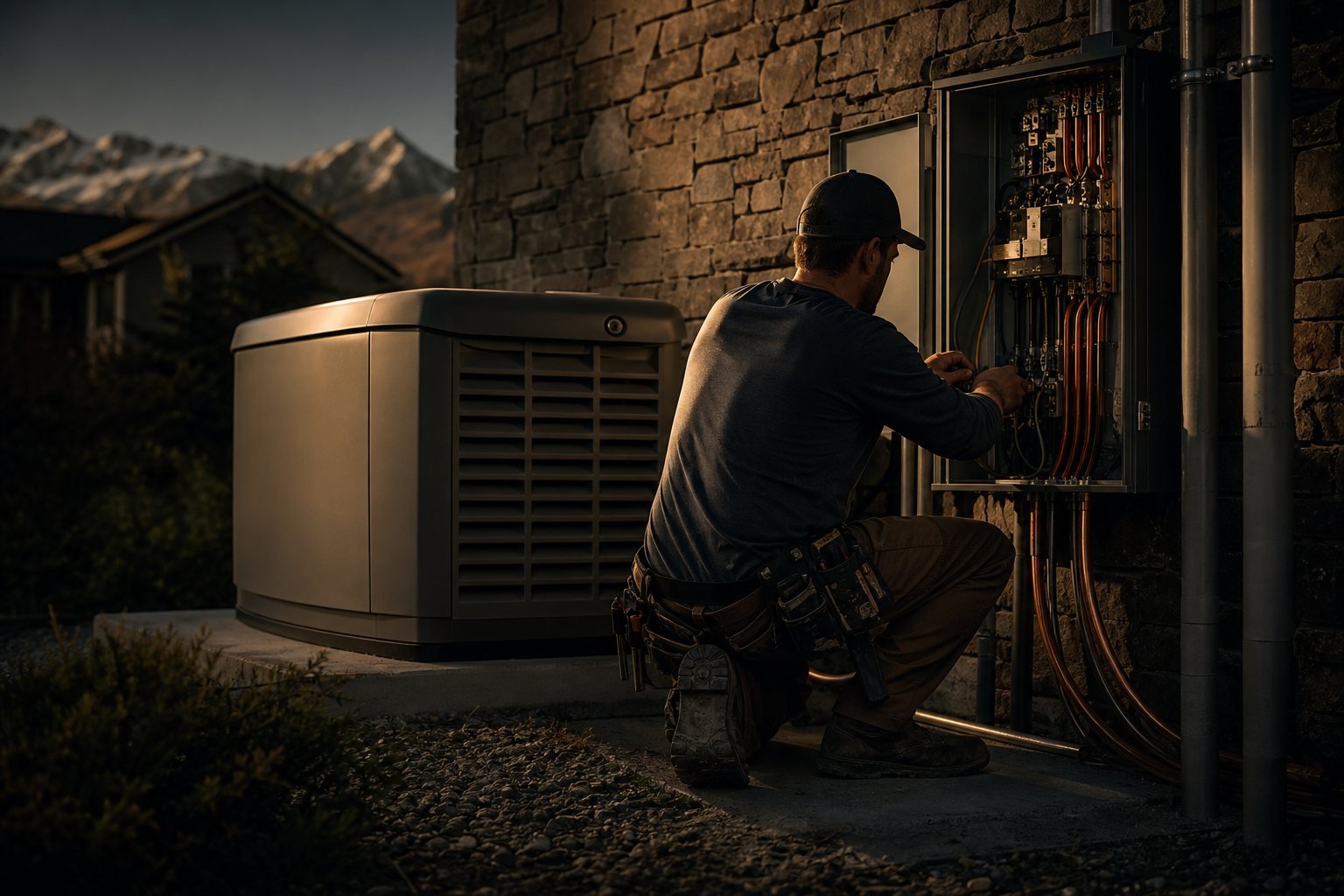
A home generator installation connects backup power to your electrical system through a transfer switch, the piece of equipment that safely separates your home from the grid while the generator runs. A standby generator starts itself when the power fails and runs on natural gas or propane; a portable setup uses an inlet box and a manual transfer switch you flip when needed. Copperview Electric sizes the system to the circuits that matter, installs the transfer equipment to code, and coordinates the permit and inspection for homes across the Ogden area.
Do you actually need backup power?
Wasatch Front wind storms, winter outages, and canyon-mouth weather answer this question for a lot of Northern Utah homeowners. Backup power stops being a luxury the moment your home depends on electricity for any of these:
What’s included in a Copperview generator install
The generator is the visible half of the system. The wiring that connects it safely is ours, and every installation includes:
- A sizing consult: whole-home or essential circuits only
- Transfer switch installation, automatic or manual
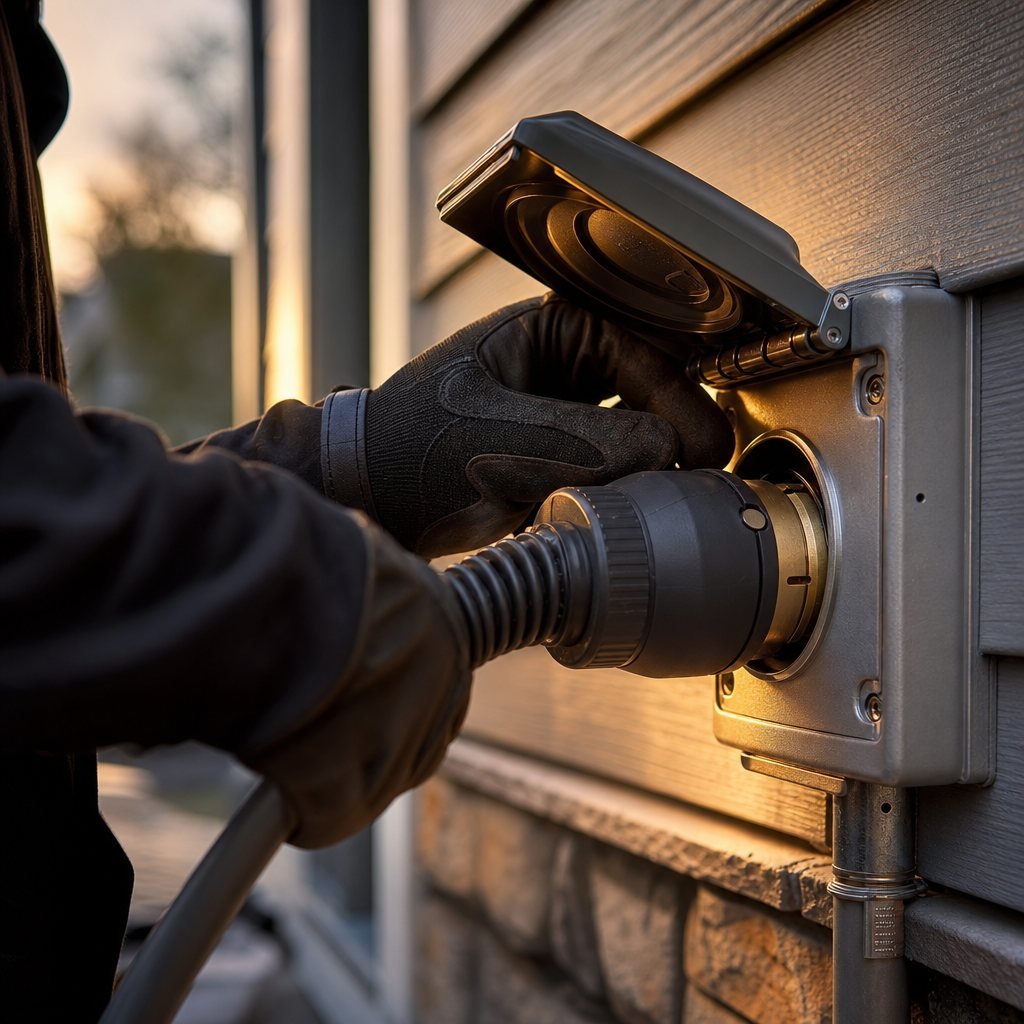
- Generator inlet box and wiring for portable setups
- Circuit selection so the loads you chose stay live
- Coordination with your gas line installer for standby units
- City permit and final inspection
- A full outage simulation before we sign off
- A walkthrough of startup, shutdown, and maintenance basics
How our generator installation works
List what must stay on
Furnace, fridge, well, sump, medical gear, Wi-Fi. The list drives the size and the budget.
Size & quote
We match generator capacity and transfer equipment to that list and give you one itemized number.
Permit & scheduling
We pull the permit and line up the electrical work with the gas and pad work standby units need.
Install & connect
Transfer switch, inlet or standby hookup, and clean labeling of every backed-up circuit.
Simulate an outage
We kill the main, watch the system carry the load, and walk you through it before we leave.
Standby vs portable: which backup is right?
Both get the lights back on. The difference is what you have to do when the power fails, and what you pay up front. A standby unit handles the outage for you; a portable setup trades convenience for a much smaller investment.
| Portable + inlet | Standby (automatic) | |
|---|---|---|
| When the power fails | You roll it out, connect one cord, flip the transfer switch | It starts itself, usually within seconds, even when you’re away |
| Fuel | Gasoline you store and rotate | Natural gas or propane, no jerry cans |
| What it runs | The essential circuits you picked | Essentials or the whole home, per sizing |
| Up-front cost | The most affordable path to real backup | A larger investment in set-and-forget coverage |
| Best for | Occasional outages, hands-on owners | Frequent travelers, medical needs, whole-home coverage |
Which generator brands do you install?
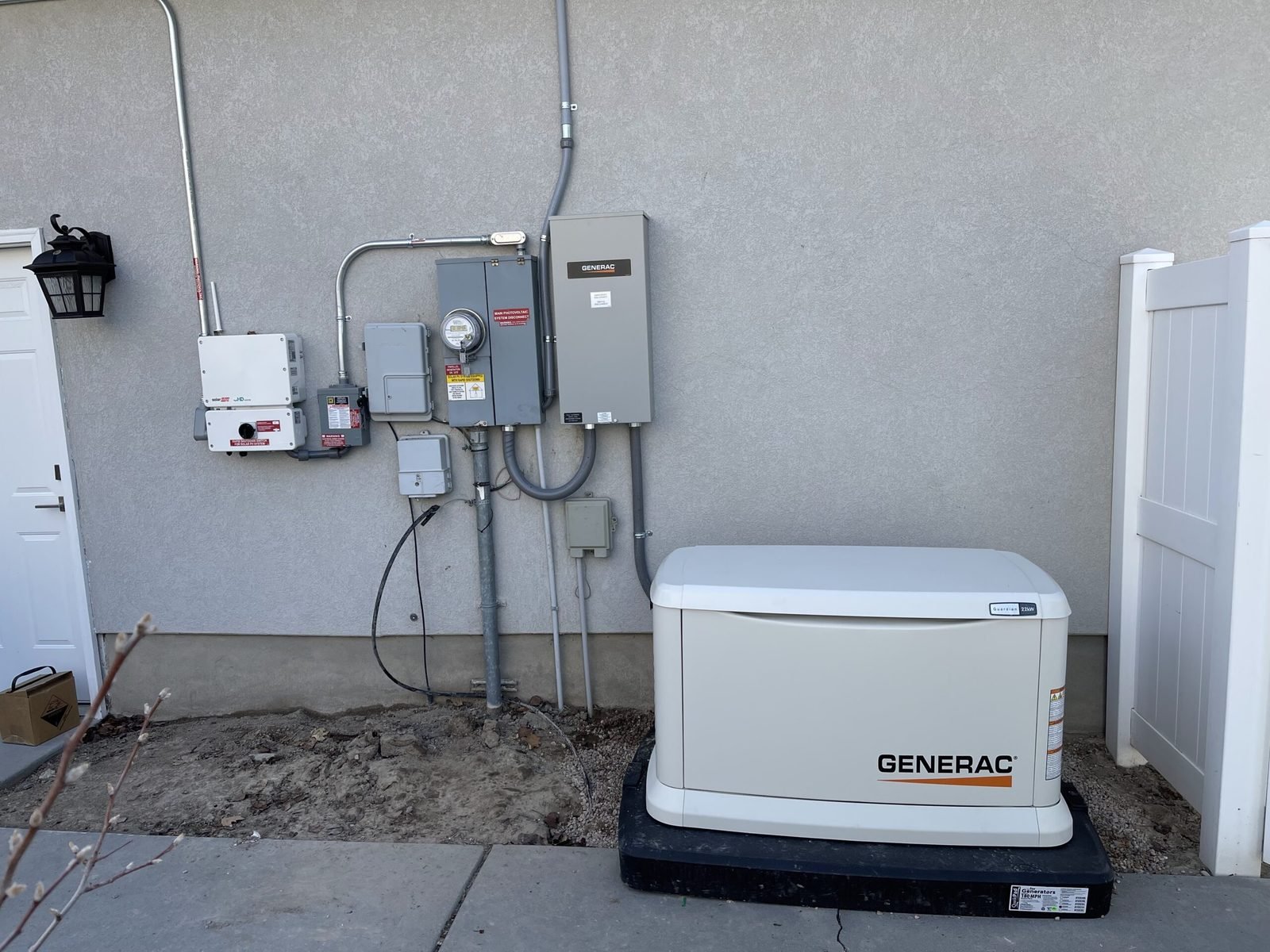
We install and connect the major residential standby platforms, including Generac and Kohler, and we wire portable setups for whatever quality unit you own. What matters most isn’t the badge on the enclosure, it’s that the transfer equipment behind it is sized, wired, and inspected correctly.
A generator connected without a proper transfer switch can backfeed the grid, which endangers utility line workers and is illegal for good reason. Every system we install isolates your home from the grid mechanically, so there is no scenario where your generator and the utility meet. If you already own a unit, we’ll tell you honestly whether it fits your home’s needs before we connect anything.
How much does generator installation cost in Ogden?
The honest answer is that the range is wide because the systems are. A portable-generator inlet and manual transfer switch is a fraction of the cost of a whole-home standby system, which in Utah commonly runs from several thousand dollars into five figures once the unit, pad, gas work, and electrical are counted. We quote the full picture so nothing shows up later.
What moves the number
Tell us what has to stay on and we’ll price both paths, portable and standby, so you can choose with real numbers.
Installed to code, isolated from the grid
Generator wiring is one of the few residential jobs that can hurt someone outside your house: a backfed line can energize the grid a utility worker believes is dead. That’s why transfer equipment, permits, and inspections aren’t optional. Copperview Electric is licensed and insured, installs to the National Electrical Code as adopted in Utah, and every backup system we connect passes a city inspection.
Backup power across Weber, Davis, Morgan, Box Elder & Cache counties
From canyon-mouth wind zones to rural properties on wells, we install backup power where outages bite hardest across the Wasatch Front north corridor.
Generator questions, answered
How long can a standby generator run?
On natural gas, effectively as long as the outage lasts, because the fuel supply doesn’t run out. Propane systems run as long as the tank allows. That endurance is the biggest practical difference from gasoline portables, which need refueling every several hours.
What size generator do I need for my house?
It depends entirely on what you want powered. Essentials like the furnace, fridge, well pump, and some lights need far less capacity than whole-home coverage with air conditioning. We size from your actual circuit list, not from a chart, and quote both levels when it’s a close call.
Can I just plug my generator into a dryer outlet?
No. That’s backfeeding, and it can kill a line worker, destroy your generator when power returns, and void your insurance. It’s also illegal. A transfer switch or interlock does the same job safely, and it’s not expensive relative to the risk.
Do standby generators need maintenance?
Yes, like any engine. They self-test on a schedule and need periodic oil and filter service to be trusted in a long outage. We walk you through the routine at handoff, and the manufacturer app tracks most of it for you.
Does a generator installation require a permit in Ogden?
Yes. Transfer equipment is service-adjacent electrical work and requires a permit and inspection in Ogden-area cities. Standby units typically also involve gas-line and placement requirements. We handle the electrical permit and coordinate the rest as part of the project.
Will a generator power my EV charger?
Usually that’s not the goal: EV charging is a heavy load that would dominate a residential generator. Most owners back up the essentials and pause charging during outages. If keeping a vehicle charged during extended outages matters to you, tell us and we’ll size for it honestly.
What happens when the power comes back?
With an automatic system, the transfer switch senses the grid, shifts your home back, and shuts the generator down after a cool-down cycle, with no action from you. With a manual setup, you flip the switch back and shut the unit off. Either way, the grid and the generator never touch.
Read up before you spend a dollar
Backup Power for Utah Homes
Standby vs portable, fuels, transfer switches, sizing, permits, and honest costs.
Read the guide ExplainerStandby vs Portable Generators
What each really costs and powers, and the budget middle path most homes miss.
Read the guide Quick answerWhat Size Generator You Need
Size to the loads that matter in an outage, not to the whole panel.
Read the guideWork that pairs with backup power
Panel & Meter Upgrades
Transfer equipment sometimes needs panel capacity to land on.
Learn more
Emergency Electrician
Same-day help when an outage exposes a bigger problem.
Learn more
Repairs & Troubleshooting
Flickers and faults found and fixed at the source.
Learn more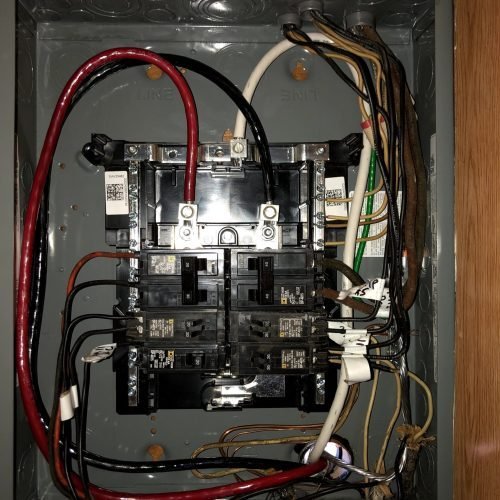
Electrical Inspections
Know your system’s condition before you invest in backup.
Learn more